



©2026 Automation.com, a subsidiary of the International Society of Automation.
-

 ISA provides technical resources and standards to help industrial automation professionals advance their careers and the field. We enable automation professionals worldwide to solve problems and enhance their skills by bringing people together to create new technologies and share best practices with future automation professionals.
-
ISA Resources
-
Upcoming Events
-
Industry Insights
-
Consortia
-

Articles and News
33,445 Results Found
-
Material Handling: Sensing Challenges & Solutions
For many OEMs, choosing the right sensor manufacturer is concern number one. OEMs want a manufacturer with a trusted name in the material handling industry. -

The 3 Technology Laws
As more and more "nodes" become connected – products, equipment, people, organizations – Metcalfe's Law comes into play. The effectiveness and value of the Internet continues to increase exponentially. -
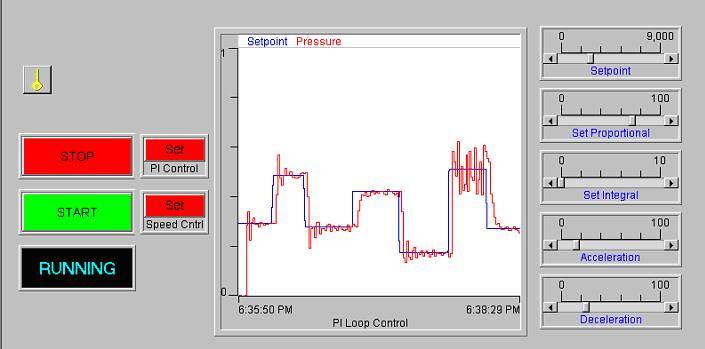
Web-Enabling Variable Frequency Drives
The level of control and the amount of information available are significantly improved over earlier methods. Most importantly, with web-enabled Ethernet, the ease of both getting information and displaying it is on an entirely new level than was possible with older technologies -
Intelligent Sensors Enable Companies to Start a Predictive Maintenance Program Without Expert Vibration Knowledge
Historically, expert knowledge of vibration analysis was required to start and maintain a vibration-based predictive maintenance program. This white paper describes how using intelligent sensors can alleviate the need for vibration experts. -
Optimizing OPC Communications with OPC Middleware Products
OPC middleware products are designed to enhance any OPC-based application. An intelligent set of OPC products simplifies the commissioning and operation of OPC clients and servers, significantly improves the data throughput of your OPC interfaces, and ensures reliable OPC communication links. -
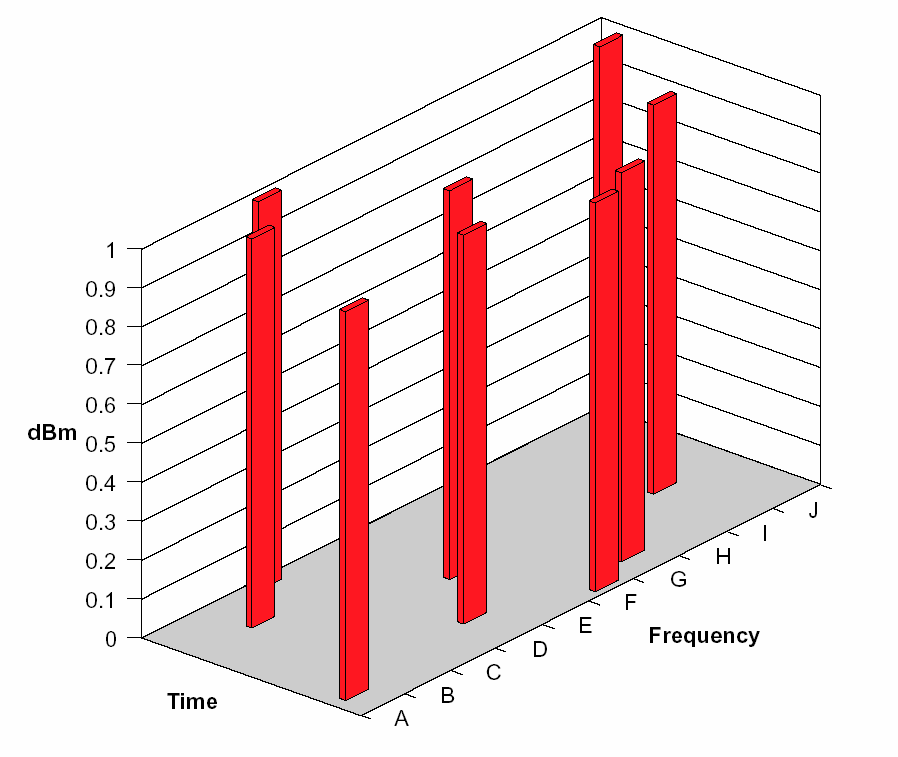
Improving Plant Production with Wireless Condition Monitoring
Because the machines may be in remote locations where network infrastructure is not available, or on moving platforms where hardwired network connectivity is not practical, wireless communications is a networking alternative that offer installation cost savings, quicker deployment and even improved reliability in certain situations. -

The Need for Wireless Monitoring - An Overview
Wireless monitoring of valves can revolutionize industrial processing and help industries meet the demands of increasing competitiveness. Intelligent wireless valve monitoring in industrial environments enables real-time data sharing throughout a facility and this, by definition, increases industrial safety, efficiency, and productivity. -
Galil updates GalilSuite Software
Enhancements in Revision 1.0 include an improved user interface, servo tuning capabilities with multiple tuning methods, real-time scopes, multiple device management and simplified communications. -
Westermo Ethernet switches to be installed in Stadler trains
Westermo will supply Viper EN50155 data communications equipment for Stadler Pankow's new FLIRT trains (Fast Light Innovative Regional Train). -
Honeywell to control petrochemical plant in Abu Dhabi
Honeywell will supply integrated control and safety systems for the Borouge petrochemicals complex in Ruwais, Abu Dhabi. -
Why Use Temperature Transmitters Instead of Direct Wiring?
Here are just some of the reasons why you should use intelligent temperature transmitters in place of direct wiring strategies -
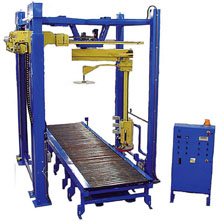
Background Suppression with Photoelectric Sensors – Challenges and Solutions
When using photoelectric sensors in simple diffused mode (a.k.a. proximity mode), the sensor uses the target to reflect light back to itself, eliminating the need for a secondary device such as a reflector. -
Reaping the Rewards of a Remote Monitoring and Diagnostics Program
Proactive monitoring of rotating equipment and control systems can increase plant efficiency and reduce unplanned downtime, operating and maintenance costs -
e-Kanban: A Key to Lean
Kanban is a visual signal that something needs to be replenished. Lean Manufacturers today use Kanban to drive a process to make, move, or buy the appropriate parts. Thus, Kanban becomes one of the fundamental building blocks of a pull (or consumption based) replenishment system. No card? No Replenishment. Paper kanban intent has efficacy; the reality of cluttered transport routes, overflowing finished goods stores, immense quantities of WIP (work-in-progress) and unscheduled machine downtimes, often make the merits of this lean manufacturing functionality questionable. When there are also frequent complaints about delivery problems, the reality is quite distant from the theory. Poor implementation of kanban is quickly overcome in an e-kanban environment. Sue Via, Senior Project Engineer with TechSolve (www.techsolve.org) suggests that Kanban is only part of the lean process, “Kanban is a higher order concept and many things must be in place before implementation of the concept is feasible. For instance, the foundation of Standard Work, 5S/Visual Management, and Quality at the Source must be in place and functional. All affected processes should go through an initial lean transformation to eliminate waste, establish Flow and initiate a Pull mindset. All processes including equipment must be reliable in order to minimize the inventory requirements.” Two of the primary limitations of a manual (or paper based) Kanban system are data availability and scalability. According to Justin Diana, VP of Datacraft Solutions (www.datacraftsolutions.com), “In a typical manual Kanban implementation, most transactions and orders are placed with faxes and emails and recorded in an Excel spreadsheet. At the end of the day, this information is limited to the individual managing and recording this data. The individuals responsible for growing and improving the process, have limited or no visibility to the data. As the number of parts, suppliers, and cells grow, managing this process only becomes more convoluted.” e-kanban, in contrast, focuses specifically on centralizing and managing all of the mission critical data. Real-time transaction capture and tracking builds a repository of information, ripe for process improvement analysis. Allowing an e-kanban system to handle and manage the collation and reporting of this data helps to remove the element of human error prevalent within a manual kanban system. The difference between kanban (a signal to trigger specific quantities of supplies in a just-in-time system) and e-kanban, is working more efficiently and effectively with a lean process. Blanket Purchase Orders, Internal SuperMarket Consumption Signals Replenishment, and Breeding proactive suppliers are three Direct Benefits of Lean e-Kanban. Justin Diana also suggests that, “One other limitation to a manual kanban system is the unpredictable and undependability of the communication... questions such as did they get it? Do they understand it? Am I going to get it? keep buyers awake at night.” Indeed, e-kanban collaboration erases those fears. Electronic records of pull requests, receipt timestamps and electronic acknowledgements all work towards a more unified and dependable method of pull communication. Via suggests that even e-kanban may have limitation in certain environments: “Electronic kanbans are effective when distance is a factor in the process; such as multiple buildings, locations; however, it may be too time consuming when the handoff points are adjacent or close to each other; such as different departments or processing equipment.” Once the discipline and visual aspect of kanban has been implemented internally, the next logical step is to apply the process externally to outside supplying entities. Lean Manufacturing relies heavily on trusted relationships with those suppliers and pre-negotiated terms of engagement. Through the use of quality certification and blanket (long-term) Purchase Orders, the manufacturer can accurately and effectively calculate the optimal level of inventory needed to fulfill demand requirements through the duration of Replenishment lead time. At the end of the day, effective kanban is the sum of a simple calculation. e-kanban products must provide a steady and predictable demand over a forcastable period, supplied by an entity that provides virtually defect free product in the negotiated period of time in the negotiated quantity at the negotiated price. e-Kanban: Vendor requirements When a relationship is setup with a supplier a service level agreement is defined. Items such as negotiated lead times, packaged quantities, order receipt confirmations, and advanced shipment notices must all spelled out very specifically. An e-kanban system monitors that each of these service level agreements are being met by the supplier in real time. If they are not, a series of alerts and notifications starts to be issued to all interested and affected parties. This gives everyone a chance to adjust their behavior to bring performance back in line in real time. e-kanban also captures all of this real time information and makes it available for historical analysis. It is made available over the internet twenty-four hours a day, so that all parties can see trends in performance. Late shipments, short shipments, and other supply chain performances are all captured and presented in terms of percentage of conformance to the service level agreement. These visuals give everyone in the supply chain information about how to focus their continuous improvement energies. e-Kanban: Only one Lean Manufacturing component e-kanban is heavily based on Lean and Six Sigma principles and tools, and the ability to effectively support a production system is critical to Best Practices. e-kanban is a critical Lean element focused on improving flexibility through the elimination of waste; e-Kanban is focused on quantifying the flexibility so that manufacturers and suppliers can rapidly evaluate the true capability of the system to respond to a specific change. Even a Lean production system could struggle to accurately respond to a new order requirement from a customer because it would take longer to identify the source of the constraint and begin resolving it. Implementing pull systems (e-kanban) with more customers is the increasing direction of manufacturing operations utilizing lean. Via argues that e-kanban only makes sense as part of an overall lean process, “Kanban in conjunction with other Lean concepts focuses on Just-in-Time delivery and the reduction of inventories. An effective kanban system requires that all non-value-added activities be eliminated or reduced in order to shrink the required Lead Times.” *** -

From simulation to plant floor control
With xPC Target Turnkey, users can do virtual design and debugging of machines, production lines and processes and the results will be automatically implemented in real control systems. -
Industrial Wire Management & Organized Wiring Systems
Structured cabling in commercial buildings based on TIA/EIA standards has become a common practice in many building automation system applications. Panduit is promoting similar approaches for industrial automation. Jeff Paliga of Panduit answered the following questions about their approach. -
Benefits of Fuzzy Logic for Advanced Process Control
The paper, “Nonlinear Control and Decision Making Using Fuzzy Logic in Logix,” provides best practices for designing with fuzzy control and examines its benefits compared to conventional control methods. -
A new approach to robotic safety: SafetyBUS p at BMW
The development of fieldbus for safety-related applications and new International and European Standards have fundamentally changed the manner in which safety is now being engineered in the plant. BMW are the first to directly integrate robotic safety functions using a safety-related fieldbus. -
Price/Margin/Volume Mindset Inhibits Growth
Most people consider low price to mean lower margins. This is not necessarily true. A high priced control system may still only generate low margins. And too, low-priced, high value, high volume products could generate healthy margins. The key, of course, is to pursue a balanced value proposition. -
Guided Wave Radar Transmitters:Meeting the Challenge for Level-Detection Under Harsh Conditions
A quick examination of how guided-wave technologies compare against other time-of-flight technologies, such as through-air radar and ultrasonic —along with a discussion of application guidelines—can serve to elucidate the benefits that this new technology can bring to engineers needing to improve process operations.