



©2026 Automation.com, a subsidiary of the International Society of Automation.
-

 ISA provides technical resources and standards to help industrial automation professionals advance their careers and the field. We enable automation professionals worldwide to solve problems and enhance their skills by bringing people together to create new technologies and share best practices with future automation professionals.
-
ISA Resources
-
Upcoming Events
-
Industry Insights
-
Consortia
-

Ask the Automation Pros
This long-running series of discussions, curated by 2010 ISA Life Achievement Award recipient Greg McMillan, gathers responses from ISA subject-matter experts on technical topics important to industrial automation professionals, academics and students.

169 Results Found
-
Feature
Benefits of Individually Fusing I/O with Indicating Fuse Blocks
The increased cost of using individual fuses will be quickly recovered by the reduced time to troubleshoot and resolve field wiring problems. One or two instances of bringing production back on line w -
Feature
Free Download: Checklists to Manage Instrumentation and Manufacturing Technology
Information needed to take advantage of the best industrial technology and address all of the considerations of an application is often difficult to find. -
 Feature
The Value of Messaging in Industrial Control Systems
If the information is detailed & useful, an operator will be able to run a control system much more independently & resolve problems without outside help. -
 Feature
Use Wireless Transmitters for Diagnostics, Improvements, and Metrics
Wireless transmitters can rapidly prototype, demonstrate, analyze and justify installations of online diagnostics, metrics and improvements. -
 Feature
How to Select the Best Control Valve Location
Locate control valves to be maintainable, provide fast injection into mixing zones, and prevent flashing and cavitation. -
 Feature
The Benefits of Teamwork for a Industrial Project Start-up or Plant Outage
Take the time (and spend the money) to show appreciation to the crews on an industrial project start-up or during a major production outage. -
Feature
How Optimal Measurement Location Maximizes Sensor Sensitivity and Signal-To-Noise Ratio
The best measurement location maximizes the sensor sensitivity and maximizes the signal-to-noise ratio and minimizes deadtime. -
 Feature
Use Field Analyzers to Measure Key Component Concentrations
Field analyzers enable a higher level of control, such as model predictive control, to improve product quality and process efficiency and capacity. -
Feature
Industrial Tip: Project Management Is Really Risk Management
As a project manager, continuously monitor everything for signs of problems and immediately inquire if something seems amiss. -
 Feature
Opportunities and Challenges for New Automation Engineers
There are many opportunities and some challenges for new engineers entering careers in industrial automation and manufacturing. A Q&A offers many insights. -
 Feature
Why You Should Use the Best Automation Technology, Even if the Price Tag Is Higher
Do not go with cheaper instrumentation unless you are certain the impact on maintenance and process performance is (and will continue to be) negligible. -
 Feature
Why New Engineers Should Get Plant Experience Early
When searching for a job, seek out plants that have at least one seasoned engineer under whom you can work. -
Feature
How to Achieve Greater Manufacturing Efficiency With Online Process Metrics
Add flow measurements to every important stream and compute online metrics for the process efficiency and capacity of each key unit operation. -
 Feature
Why Industrial Engineers Should Learn to Estimate Jobs
Estimate each process industry job before starting it and always follow up and compare the final cost figures against the initial estimate. -
Feature
Always Design in Spare Capacity to Allow for Industrial Plant Expansion
A common rule of thumb for most systems is to add at least 25 percent spare capacity to the original design. -
Feature
How to Improve Setpoints in Industrial Processes
Setpoints in industrial automation and manufacturing processes can be improved by achieving a higher level of control and knowledge. -
Feature
Murphy's Law Is Alive and Well in Industrial Processes
Automation engineers love to create complex solutions. But try not to complicate a solution any more than necessary. -
 Feature
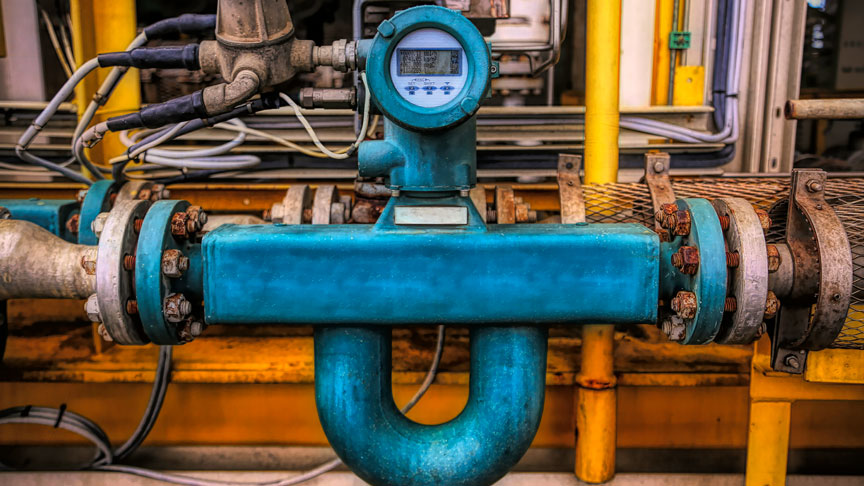
How to Use a Coriolis Meter for Mass Flow and Concentration Control
Coriolis meters can be used for measuring liquid flows in batch, fed-batch and continuous operations. -
 Feature
Benefits and Shortcomings of Vortex Flowmeters
Vortex flowmeters are a good choice for measuring the flow rate of any reasonably clean fluid where measurement at very low flows is not required. -
 Feature
How Equipment and Operating Conditions Affect Process Dynamics
Simple material and energy balances can be developed to understand the effects of equipment design and operating conditions on process dynamics. -
Feature
What are the Strengths and Weaknesses of Differential Pressure Flow Devices?
Each type of differential pressure flowmeter has a variety of pros and cons but the sheer number of types provides many options to the engineer -
Feature
Why a Virtual Plant Is Crucial for Process Control Improvement
A virtual plant provides uses the actual plant’s control system & operator interface crucial for training and all levels of process control improvement. -
 Feature
The Benefits of Learning the Industrial Codes
Try to learn at least one relevant industrial code or one code section each year and seek to apply that knowledge often so that it is not lost. -
 Feature
How to Use High Rangeability Flowmeters and Valves to Increase Plant Turndown
To increase plant turndown, use control valves and flow measurements with the best low flow response and precision. -
Feature
How to Specify a Capillary Seal Assembly
Be extremely careful to select knowledgeable technicians to install capillary seals. Many a pipefitter has pulled them out of the box and bolted them up without the proper gaskets and spacers. If this -
Feature
How to Maximize Loop Coordination and Optimization
Employ setpoint filters, velocity limits and external-reset feedback to meet the process control objectives at your plant or facility. -
-
Feature
How to Eliminate Split Range Oscillations in Process Control
Use precise valves, scheduled tuning, external-reset feedback, directional rate setpoint limits, and an enhanced PID to stop split range oscillations. -
 Feature
The Value of Process in Designing or Improving an Industrial Control System
Designing and/or improving a control system is practically impossible if the team does not understand the process. -
 Feature
Why You Should Not Use On-Off Valves as Control Valves
On-off valves should not be used as control valves (for throttling) and control valves should not be used as on-off valves (for isolation). -
 Feature
Why Operators Can Make or Break an Automation Project
Operator buy-in and approval are critical to automation project success. Get the operators involved in the design process early and listen to what they say. -
 Feature
Why You Should Look for Opportunities to Improve Plant Profitability
Estimate benefits from a decrease in variability & an increase production rate. Implement solutions where an increase in plant profitability is justified -
 Feature
Pitfalls of Selecting Low-Cost Industrial Instrumentation
Buying high-quality instrumentation does not mean that the buyer has to pay list price. -
Feature
Why You Should Use an Enhanced PID for At-Line and Off-Line Analyzers
An enhanced PID can simplify the tuning and improve the stability for loops with large and/or variable analyzer update times. -
 Feature
The Cost of a Continuous Waste Stream in Process Automation
Any continuous waste stream is an excellent candidate for a money saving opportunity. Always keep an eye out for them. -
 Feature
Automation Industry Career Tip: Be a Team Player
For a successful automation industry career, work together on a one-on-one basis, and seek inspiration and recognition as a team. -
Feature
ISA Mentor Program: The Key to the Future
The ISA Mentor Program is an ad hoc and extra curricula activity worth sacrificing free time to advance the careers of young automation professionals. -
 Feature
Automation Industry Career Tip: Learn New Skills and Explore Technological Advances
An emerging opportunity is learning how to mine information from an asset management system and an instrument management system. -
News
Automation Week: Control Performance Track
Effective and accurate measurement and control are essential components of both improved efficiency and profitability of industrial operations. Traditionally, increased efficiency directly translated -
 Feature
Why Control Panels Can Be a Source of Risk in Retrofit Projects
Project management is really just risk management, and a large source of risk to an automation project is the control panels. -
Feature
How to Use Control Loops to Eliminate Manual Actions and Sequences in Process Control
Use a PID control to eliminate manual actions and scheduled actions whenever a reasonable PV measurement is available. -
 Feature
The Importance of I/O Cards When Performing a DCS Retrofit
The electrical analysis of the systems should not be assigned to a junior engineer. -
 Feature
The Importance of Minimizing Dead Time in Process Automation
Minimize the largest sources of dead time in process control applications and consider the use of an enhanced PID developed for wireless and feedforward control for large dead times. -
 Feature
Automation Industry Career Advice: Seek Conversations with Knowledgeable People
Start a conversation with everyone responsible for the successful implementation, maintenance, and operation of your designs. -
 Feature
The Benefits of Lifelong Learning for an Industrial Automation Career
The more knowledge an industrial engineer masters, the more valuable he or she becomes. -
Feature
How to Get the Most out of Your PID Controller
Technical paper shows you how to get the most out of your PID controller, extending its functionality from basic to advanced control. -
 Feature
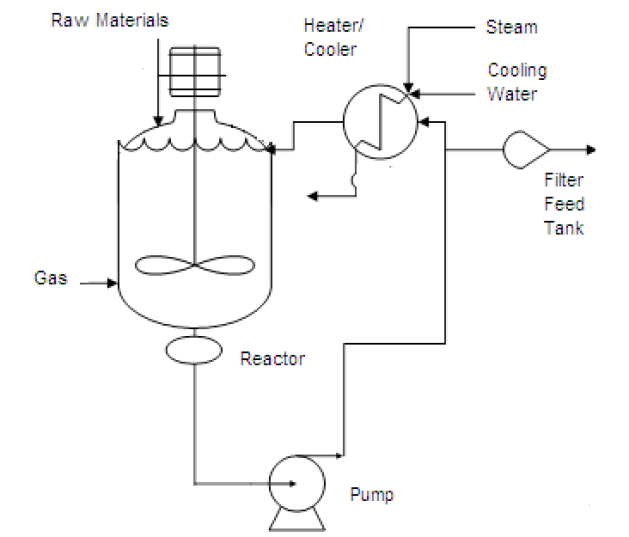
How to Improve Batch Reactor Temperature Control
Temperature is a critical condition for chemical reactions to take place. In batch process, control becomes more complicated because of the variability of level, pressure and concentrations. -
 Feature
What Is the Best Approach in Developing a Dynamic Process Model?
The primary objective of a dynamic model of a continuous process for process control is for the open loop gain, open loop time constant, and total loop deadtime be correct for the effect of each proce -
Feature
What Are the Pro and Cons of Different Types of Dynamic Process Simulators?
The best way to classify process simulators is to look at the original intent of the simulator software when first released, who are the software developers, who configures the models, and how are the -
Feature
How to Check out DCS I/O at the Panel Shop
An I/O checkout on a DCS system is rather difficult because there is no means to “force” the I/O as you can most PLCs