



©2026 Automation.com, a subsidiary of the International Society of Automation.
-

 ISA provides technical resources and standards to help industrial automation professionals advance their careers and the field. We enable automation professionals worldwide to solve problems and enhance their skills by bringing people together to create new technologies and share best practices with future automation professionals.
-
ISA Resources
-
Upcoming Events
-
Industry Insights
-
Consortia
-

Automation Quiz
Test your knowledge of the automation industry with questions from ISA certification programs.

250 Results Found
-
 Feature
AutoQuiz: Why Must Voltage Be Reduced Along with Frequency in a Variable Frequency Speed Controller?
To maintain a constant (rated) flux density, the applied voltage must also be changed in the same proportion as the frequency (per Faraday’s law). -
 Feature
AutoQuiz: What Process Confirms That a Company Meets the Needs of Customers and Complies With Statutory and Regulatory Requirements?
ISO 9000 is a family of international quality management systems standards designed to help organizations ensure that they meet the needs of customers and other stakeholders while meeting statutory an -
Feature
AutoQuiz: What is “Slip” in an AC Induction Motor?
Slip is usually expressed as a percentage, and varies by motor, from nominally 0.5 percent for very large motors to about 5 percent for small, specialized motors.. -
Feature
AutoQuiz: What Factors Affect the Reynolds Number for a Flowing Fluid?
The Reynolds Number for a flowing fluid can be generalized as the ratio of kinetic (or inertial) forces divided by viscous forces. -
 Feature
AutoQuiz: Identify Three Levels Within the Manufacturing Computer Systems Hierarchy
The manufacturing computer systems hierarchy is defined in ISA-88 and ISA-95 by Level 0 through Level 4. -
 Feature
AutoQuiz: What Are the Limitations of an Analog Multimeter?
An analog voltmeter works by passing a current through a coil that is suspended between two permanent magnets. -
 Feature
AutoQuiz: How Are the Maintainability and Maintenance of Automation Systems Related?
Maintainability is the probability that a device will be restored to an operating condition within a specified period when maintenance is done with prescribed resources and procedures. -
 Feature
AutoQuiz: How to Use the Parity System to Detect Data Transmission Errors
Parity is a simple method using a binary code (“1” or “0”) to detect data transmission errors by making the sum of the “1” bits in the source data either an odd or an even number. -
 Feature
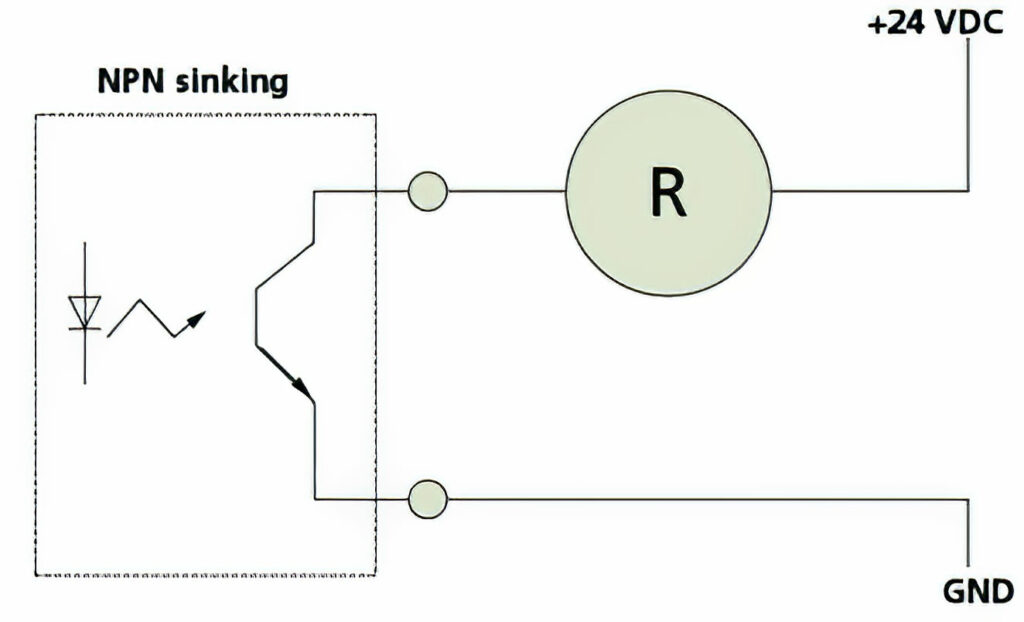
AutoQuiz: What Electrical Event Can Occur With a 24 VDC Open-Collector Output Sinking Configuration?
An NPN (sinking) open-collector, when “energized,” switches the load side of the relay (at terminal “A”) to ground (terminal “B”). -
 Feature
AutoQuiz: What Device Is Used to Convert an Analog Signal From a Transmitter to the Signal Required by a Digital Controller?
A digital controller requires a digital signal as its input. A 4-20 mA transmitter outputs an analog signal. Therefore, a device to convert an analog (A) signal to a digital (D) is required. -
 Feature
AutoQuiz: What Are the NPV and IRR Methods for Evaluating Industrial Automation System Capital Investments?
Net present value (NPV) by itself is not a good indicator of the viability of a project or a good differentiator between two competing projects. -
Feature
AutoQuiz: What Is the Logical Analysis Troubleshooting Method for an Industrial Process?
Once a problem is identified in an industrial process, data must be gathered and analyzed to determine a viable set of potential actions and solutions. -
Feature
AutoQuiz: What Should an Engineer Include in a Final Automation Project Report to Senior Management?
An executive summary and bullet-item lists for an automation project allows managers them to understand the basic outcomes and conclusions of your project. -
 Feature
AutoQuiz: What Is the Purpose of an Instrument Location Plan?
Instrument location plans are most often used to support new plant installations and give the installer information about the actual physical location of the installation of an instrument. -
 Feature
AutoQuiz: What Is the Significance of the Fieldbus Intrinsic Safety Concept?
The fieldbus intrinsic safety concept simplifies the rules governing energy storage in field cables and makes more power available to the fieldbus trunk. -
Feature
AutoQuiz: Which Valve Actuation Method Is Best for a Very Large Force and a Small Actuator?
Hydraulic actuators are driven by a high-pressure fluid (up to 4,000 psig) that can be delivered to the actuator by a pump that is remote from the actuator itself. -
Feature
AutoQuiz: What Are the Benefits of Self-Study Workbooks for Operator Training?
Self-study workbooks ensure that all students have been exposed to the same learning objectives and material. -
Feature
AutoQuiz: How are Pressure Changes Measured in Industrial Applications?
For most pressure applications, changes in pressure are detected by the change in deflection of a measuring diaphragm. -
 Feature
AutoQuiz: What Are the Cybersecurity Risks to a Geothermal Plant?
Automation systems are vulnerable to many cybersecurity risks, but email viruses pose the least risk to disrupt operations and create an emergency situation. -
 Feature
AutoQuiz: Technical Characteristics of the Open Systems Interconnection Model
The presentation layer for protocols used in control systems provides the translation of data received into a usable format, such as binary data from a programmable logic controller into floating poin -
 Feature
AutoQuiz: How to Install Thermocouple Extension Wires
Proper installation of thermocouple extension wires requires special terminal blocks to prevent additional junctions from being formed. -
 Feature
AutoQuiz: How Are Errors Corrected in Industrial Network Data Communications?
Cyclic redundancy checking is a method of checking for errors in data that has been transmitted on a communications link. -
 Feature
AutoQuiz: How to Calibrate a High-Range Electronic Pressure Transmitter
A dead-weight tester apparatus uses known traceable weights to apply pressure to a fluid for checking the accuracy of readings from a pressure gauge or pressure transmitter. -
Feature
AutoQuiz: What Is Receipt Verification in Industrial Processes?
Receipt verification is an industrial systematic process by which a site verifies that what was specified and ordered is actually what is received. -
Feature
AutoQuiz: What Industrial Troubleshooting Technique Can Help Replace a Bad Component?
The substitution method may reveal the component that is the cause of the problem. -
Feature
AutoQuiz: What is a Database Record?
A database record is a single row of information in a table. -
 Feature
AutoQuiz: Characteristics of an Industrial Controller
For a direct-acting controller, the resulting output movement is in the same direction as the movement of the process variable. -
 Feature
AutoQuiz: When Does Cavitation Occur in Liquid Flow?
In cavitation, when the liquid drops below the vapor pressure around the vena cava, the liquid vaporizes. -
Feature
AutoQuiz: What Happens When a Reset Action Is Added to an Industrial Controller Tuned for a Fast Control Loop?
Both gain and reset (integral action) act upon the error in the same direction, per a simplified proportional, integral, derivative (PID) control algorithm. -
 Feature
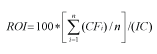
AutoQuiz: What is the Risk in Using Standard ROI Ratios to Invest in an Automation System?
ROI equations do not account for lost opportunity to collect investment interest on money diverted to fund an automation project or the time value of money. -
 Feature
AutoQuiz: How to Calculate Steady State Gain for a Standard Pneumatic Instrument Loop
Gain is defined in industrial control theory as the change in input divided by the change in output. -
Feature
AutoQuiz: What Are Common Terms Used to Quantify Dangerous Industrial Failures?
Spurious trips and nuisance trips are indicative of “safe” failure modes, not “dangerous” failures. -
 Feature
AutoQuiz: How to Measure the Resistance in a Circuit
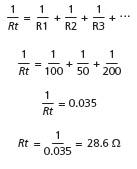
Resistance is an electrical quantity that measures how a device or material reduces the electric current flow through it. -
 Feature
AutoQuiz: How to Calculate Uptime for an Automation System
The most important measure for production equipment support is operational availability, or “uptime.” -
 Feature
AutoQuiz: How to Troubleshoot a System Failure Due to a Bad Component
Troubleshooting is often an iterative process. If the proposed solution is not the correct one, further analysis and data collection are warranted. -
 Feature
AutoQuiz: What Is the Purpose of a Markov Model Computation?
Systems that exhibit a Markov property are ones in which the future does not depend on the past. -
Feature
AutoQuiz: Characteristics of a Loop Diagram
Instrument loop diagrams are very detailed depictions of an industrial control or process -
Feature
AutoQuiz: Characteristics of a Fuzzy Logic Controller
A PI controller is tuned by adjusting gain or proportional band & integral time settings. Fuzzy logic controller is tuned by adjusting scale factors. -
 Feature
AutoQuiz: What Is the Best Method for Measuring the Level of a Highly Corrosive Media?
Ultrasonic level detectors use the principle of reflection of an acoustic wave from liquid to vapor phase and vapor to liquid phase. -
 Feature
AutoQuiz: Which Signal Type Indicates Direction and Velocity in a Motion Control Application?
To indicate both direction & velocity, a signal with both positive and negative characteristics is required. Motion controls use either ±10 V or ±5 V signals to accomplish this. -
Feature
AutoQuiz: What Type of Switch Is Designed to Detect the End of Travel of a Valve?
Limit switch is a general term to describe the class of devices that are used to detect the end of travel of a valve, louver, or any other item that may be in motion. -
Feature
AutoQuiz: What Is the Benefit of Industrial RFID Tags Over Barcode Systems?
RFID tags consist of silicon chips and an antenna that can transmit data to a wireless receiver. -
Feature
AutoQuiz: When Should Operating Instructions Be Developed for an Industrial Process?
Operating instructions may be included in a functional specification or operating description and may range from a few pages describing how to operate one part of a plant to a complete set of directio -
 Feature
AutoQuiz: Cold Junction Compensation Is Required for Which Type of Temperature Measurement Device?
A thermocouple is comprised of two wires of dissimilar metals, connected at one end, which is placed in the process to be measured. This is called the measuring junction. -
 Feature
AutoQuiz: What Security Property Is Affected If a Hacker Intercepts and Changes Set Point Data?
Data integrity implies that the data received is the same (value, format, quality) as the data sent. -
Feature
AutoQuiz: What Is a Schematic Representation of a Complete Hydraulic, Electric, Magnetic, or Pneumatic Circuit Called?
A loop diagram shows complete details of a hydraulic, electric, magnetic, or pneumatic circuit, showing all of the interconnections, components, and devices that participate in that circuit. -
Feature
AutoQuiz: What Is the Fastest "Electronic" Method to Bring a DC Motor to a Full Stop?
In regenerative braking, all of the motor's energy is fed directly back into the AC power line. -
 Feature
AutoQuiz: Unique Feature of a Pneumatic Differential Pressure Sensor/Transmitter
In a pneumatic transmitter, the nozzle faces a baffle, so, as the measured pressure increases, the baffle moves toward the nozzle. -
 Feature
AutoQuiz: What Is the Definition of Restore Time in Industrial Maintenance?
The restore time includes all activities required to diagnose and repair the device. This includes diagnosing the problem, isolating the device from the system, traveling to the device, and repairing -
Feature
AutoQuiz: What Is the Condition When Controller Output Increases in Conjunction With a Controlled Variable Increase?
As pressure increases (controlled variable), the valve output would increase to open the valve in order to relieve the pressure. -
Feature
AutoQuiz: How to Program the Correct PLC Equation for a Pressure Transmitter
To scale the analog input, calculate the "% of the raw counts range" that is represented by the analog input, and multiply by the EU100% range, since the EU0% value is 0. -
Feature
AutoQuiz: How to Perform PLC Raw Count Calculations for Pressure Transmitters
A pressure transmitter is connected to the analog input card of a PLC. The 4-20mA input value from the transmitter is converted into equivalent raw counts. -
 Feature
AutoQuiz: What Is the Purpose of an Optical Isolation Circuit on a Digital Input Card in a PLC I/O System?
An optical isolation circuit is used to provide a barrier between the field wiring & associated field wiring issues (shorts, ground loops, transients, etc.) -
 Feature
AutoQuiz: What Is the Best System for Analyzing Multiple Sources of Data in an Industrial Plant or Facility?
A well-designed, integrated building automation system seamlessly integrates lighting, elevators, boilers, chillers, fire protection, generators, access control, and HVAC control systems, which may al -
Feature
AutoQuiz: How to Convert a Transmitter's Current Output Signal to a Voltage Input Signal
Place a resistor across the input terminals of the controller to convert a transmitter's current output signal. -
Feature
AutoQuiz: What Flow Sensor Naturally Generates a Pulsed Output to Represent Flow Rate?
Turbine meters almost universally use a magnetic pickup to determine the number of rotations of the spinning turbine element. -
 Feature
AutoQuiz: What Information Is Typically Included in a Loop Diagram?
Tag numbers, wire numbers and terminal numbers, and indication of the interrelation to other instrumentation loops, are the essential elements of a loop diagram. -
 Feature
AutoQuiz: What Is the Purpose of Forward Decoupling?
A forward decoupling algorithm can be used to cancel out MIMO interactions, making more traditional control methods applicable to complex systems. -
Feature
AutoQuiz: What Is the Minimum Course of Action to Take Before Replacing Damaged Wiring?
All circuits to be worked on should be tested with a multi-meter prior to performing work to ensure that no voltage or current is present. -
 Feature
AutoQuiz: Which Flow Measurement Device Does Not Require Square Root Extraction?
The output from a magnetic flowmeter is a linear signal that is proportional to the velocity of the flowing fluid. -
 Feature
AutoQuiz: What Is the Purpose of a Valve Positioner?
A valve positioner adjusts the pneumatic output to a valve actuator so that the requested position of the valve from a controller is achieved. -
Feature
AutoQuiz: Models of Control to Describe a Batch Process
A process stage in the process model can be mapped to a unit procedure in the procedural model, which in turn is mapped to a unit in the physical model. -
Feature
AutoQuiz: Which Type of Electrical Wires Would Normally Be Shielded in Control Systems?
Cable shield, connected to an isolated zero potential, is required to prevent nearby inductive loads and EMF fields from altering the low-level voltage or current levels in the signal wiring. -
Feature
AutoQuiz: What is Common Mode Noise?
Common noise must be in phase between conductors, or it converts to normal mode or differential noise. -
 Feature
AutoQuiz: What Are the Advantages of Cascade Control?
Cascade control does very little to improve upon control loops that were previously stable. Examples are liquid level and gas pressure control loops. -
 Feature
AutoQuiz: Characteristics of a Flowmeter
For a turbine flowmeter, the rotor is supported by the hubs and bearings inside of a flowmeter body, and as the rotor spins, the number of revolutions is determined with a magnetic pickup. -
 Feature
AutoQuiz: How to Measure the Temperature Between Two Dissimilar, Joined Metals
A thermocouple contains two different conductors that produce a voltage proportional to a temperature difference between the ends of a pair of conductors. -
 Feature
AutoQuiz: How to Measure Fluid Velocity Through a Pipe
The constant between pipes of differing diameters is the flow rate (and other fluid properties) is the same in both pipe lengths. -
 Feature
AutoQuiz: Design Specifications for Building Automation Systems
Energy management, access control, lighting control, asset management, communications, life safety, fire alarm, and HVAC controls are all of interest when designing a building automation system -
Feature
AutoQuiz: What Is the Continuous Sequence of Steps Performed by a PLC Processor?
The time it takes for the PLC to complete its scanning of all program steps in one operating cycle is called the scan time. -
 Feature
AutoQuiz: What Network Security Technology Does Not Use Encryption?
A virtual local area network (VLAN) is achieved through configuration of Ethernet switches and not encryption. It divides a physical network into smaller logical networks to increase performance, impr -
Feature
AutoQuiz: What Is the Purpose of the Proper Grounding of Electrical Devices?
Proper grounding provides safety, over-current protection, electrical noise reduction, lightning protection, and static electricity reduction. -
Feature
AutoQuiz: How to Calculate the Pressure Recovery Factor for Valves
Pressure recovery factor is the increase in fluid static pressure that occurs as fluid moves through a valve from the vena contracta to the valve's outlet and downstream piping. -
 Feature
AutoQuiz: What Are the Four Key Activities in the Maintenance Cycle of a Control System?
Documentation of the "as left" condition of the control system is a basic requirement for all maintenance, calibration, commissioning, and testing tasks. -
Feature
AutoQuiz: What Are Multiple Independent Protection Layers in Relation to Industrial Safety?
A consequence of the concept of multiple independent protection suggests minimization of risk occurs when safety instrumented systems are completely independent from process control systems. -
 Feature
AutoQuiz: What Is the Response in Level Control System If the Process Liquid Medium Changes?
For a capacitance probe installed in a metal tank, the measured level is proportional to the measured capacitance between the level probe (one capacitor plate) and the tank wall (second capacitor plat -
 Feature
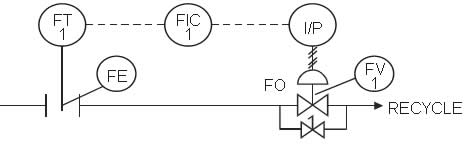
AutoQuiz: How to Determine Cause of the Apparent Discrepancy in Flow
Periodic visual inspection of orifice plates is required to ensure the integrity of measurement with a digital flow transmitter. -
 Feature
AutoQuiz: Which Flowmeter Type Does Not Operate on the Principle That a Differential Pressure Is Developed Across a Flow Restriction?
A Coriolis flowmeter develops a flow measurement by measuring the degree of deformation (twisting) of a vibrating tube(s) as the fluid moves through the tube. -
 Feature
AutoQuiz: What Is an Example of Adaptive Control?
A controller uses a quantitative process model and modifies controller tuning based on how the process responds in relation to the model prediction. -
 Feature
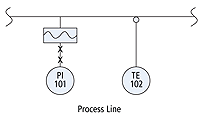
AutoQuiz: P&ID Determination for Temperature and Pressure Sensors
Instrument technicians often use P&ID diagrams as a reference to identify what type of instrumentation is installed and how the instrumentation is installed in the process. -
 Feature
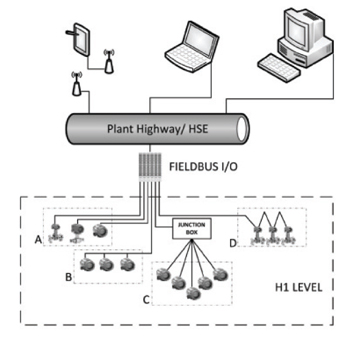
AutoQuiz: What is Tree Topology in Fieldbus?
Tree Topology concentrates the connection of several field devices to couplers/junction boxes. Tree topology is also known as "Chickenfoot" or "Star" configuration. -
 Feature
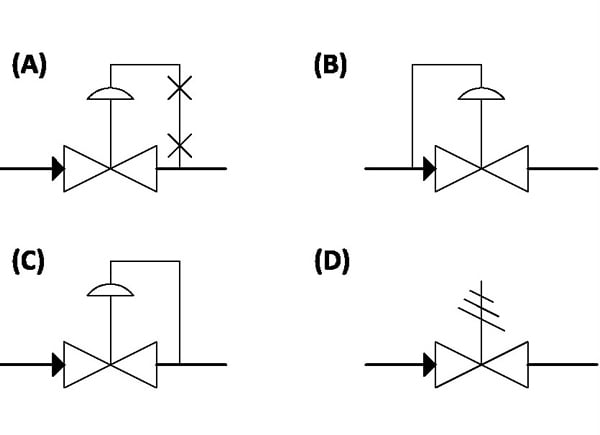
AutoQuiz: What P&ID Symbol Is Used to Indicate a Temperature Regulator?
The symbol reflects a temperature regulator, filled thermal system. -
 Feature
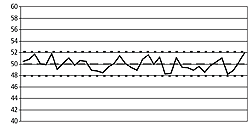
AutoQuiz: How to Assess the Optimal Alarm Deadband Setting
Learn to assess the alarm deadband setting on a high alarm. -
 Feature
AutoQuiz: What Is the Purpose of an Intrinsic Safety Barrier?
An intrinsic safety barrier prevents excess voltage and current from reaching the hazardous area. -
Feature
AutoQuiz: How to Assess the Hazard/Risk Category for an Industrial Electrical Panel
Work on energized electrical conductors and circuit parts, including voltage testing on panelboards, or other equipment rated 240V and below would be classified as Hazard/Risk Category 1. -
 Feature
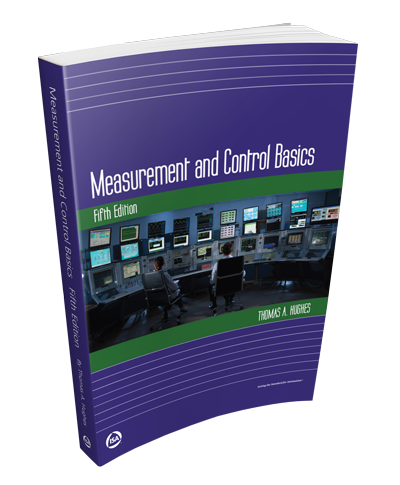
AutoQuiz: How is the Reynolds Number Used in Flow Measurement?
For the Reynold's number, the inertial forces in the numerator are given by the product of mass (density), fluid velocity, and pipe diameter. -
 Feature
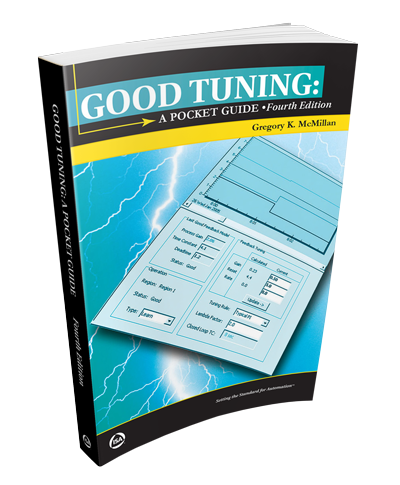
AutoQuiz: What Is the Best Tuning Method for a Catalyst Feed Flow Controller?
Only a closed-loop tuning method can be used with an exothermic reaction where the reactor can "run away" (increasing speed of reaction as the reaction progresses, catalyzed by its own heat of reactio -
 Feature
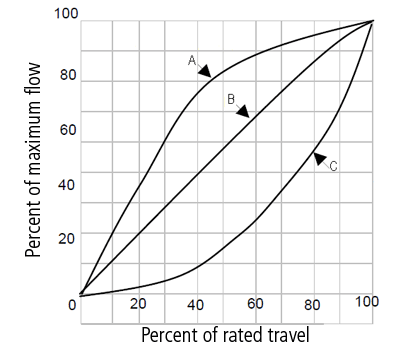
AutoQuiz: Plotting Control Valve Characteristics
For an equal percentage valve characteristic, each increment of valve movement provides the same percentage increase in flow. -
 Feature
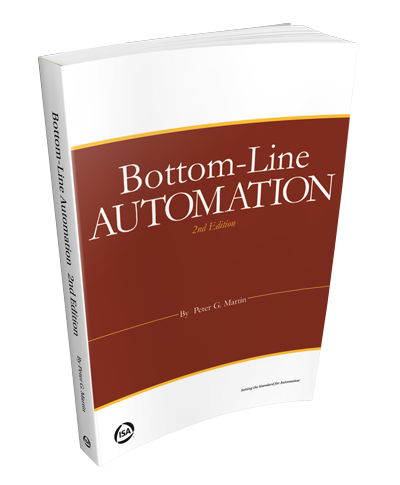
AutoQuiz: What is the Lifecycle Economic Model?
All lifecycle costs should be considered over the entire expected life of a project, with all costs calculated on a net present value basis. -
 Feature
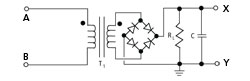
AutoQuiz: Characteristics of a Full-Wave Bridge Rectifier Circuit
A bridge rectifier consists of diodes in a bridge circuit configuration. It features the same output polarity for either input polarity, and is used for converting an alternating current (AC) input in -
 Feature
AutoQuiz: What Is the Cause of Cavitation in a Liquid Flow Stream?
When fluid drops below a liquid's vapor pressure, a gas is formed. As fluid moves downstream to where the fluid pressure is greater than the vapor pressure, it "collapses" back into a liquid. -
 Feature
AutoQuiz: How to Read a Gauge Pressure Transmitter
At zero gauge pressure in the steam line, you are essentially suppressing (pushing) the transmitter output back down to zero after the system reaches equilibrium. The transmitter will read that impuls -
 Feature
AutoQuiz: Failures of Complex Systems in SIS Design and SIL Selection
A fault tree analysis begins with the "top event," which is the result of a number of basic events that contribute to, or initiate, the system failure. -
 Feature
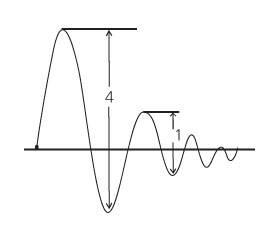
AutoQuiz: Loop Tuning Terminology for Change in Amplitude
The common method of judging tuning is known as the "quarter wave decay" method. It has been shown if a loop is tuned so the oscillation decays with each wave being one quarter of the previous wave, i -
Feature
AutoQuiz: Industrial Applications for Nonincendive-Rated Field Wiring
Nonincendive is allowed in Class 1, Division 2; Class 1, Zone 2, and Non-hazardous rated areas. Use in higher hazard areas, such as Division 1, Zone 1, or Zone 0 areas, is not allowed. -
 Feature
AutoQuiz: Standard Wiring Color for Type K Thermocouple
Type K (chromel–alumel) is the most common general purpose thermocouple with a sensitivity of approximately 41 µV/°C. -
 Feature
AutoQuiz: What Is the Liquid Flow Condition Where Falling Static Pressure Causes Formation of Vapor Bubbles?
The first stage of cavitation is the formation of vapor bubbles within the liquid system because of the fluid's static pressure falling below the fluid vapor pressure -
 Feature
AutoQuiz: What are the Advantages and Disadvantages of RTDs?
Resistance temperature detectors require a temperature transmitter to function. This is not a disadvantage of an RTD, since its function does not require a temperature transmitter to be installed. -
 Feature
AutoQuiz: How to Interpret Relay Logic for a Pump Control Switch
When a pump control switch is in auto, the storage tank low level switch or the pressure tank high level switch can stop the pump. -
 Feature
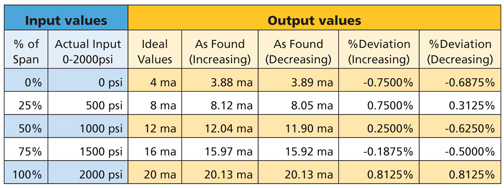
AutoQuiz: How to Diagnose Industrial Pressure Sensor Errors
If a pressure sensor/transmitter is giving a non-linear response, replacement of the sensor and/or the transmitter will be required.