



©2026 Automation.com, a subsidiary of the International Society of Automation.
-

 ISA provides technical resources and standards to help industrial automation professionals advance their careers and the field. We enable automation professionals worldwide to solve problems and enhance their skills by bringing people together to create new technologies and share best practices with future automation professionals.
-
ISA Resources
-
Upcoming Events
-
Industry Insights
-
Consortia
-

Automation Quiz
Test your knowledge of the automation industry with questions from ISA certification programs.

250 Results Found
-
 Feature
AutoQuiz: What Is the Response in Level Control System If the Process Liquid Medium Changes?
For a capacitance probe installed in a metal tank, the measured level is proportional to the measured capacitance between the level probe (one capacitor plate) and the tank wall (second capacitor plat -
 Feature
AutoQuiz: How to Determine Cause of the Apparent Discrepancy in Flow
Periodic visual inspection of orifice plates is required to ensure the integrity of measurement with a digital flow transmitter. -
 Feature
AutoQuiz: Which Flowmeter Type Does Not Operate on the Principle That a Differential Pressure Is Developed Across a Flow Restriction?
A Coriolis flowmeter develops a flow measurement by measuring the degree of deformation (twisting) of a vibrating tube(s) as the fluid moves through the tube. -
 Feature
AutoQuiz: What Is an Example of Adaptive Control?
A controller uses a quantitative process model and modifies controller tuning based on how the process responds in relation to the model prediction. -
 Feature
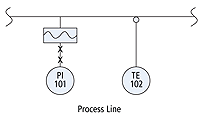
AutoQuiz: P&ID Determination for Temperature and Pressure Sensors
Instrument technicians often use P&ID diagrams as a reference to identify what type of instrumentation is installed and how the instrumentation is installed in the process. -
 Feature
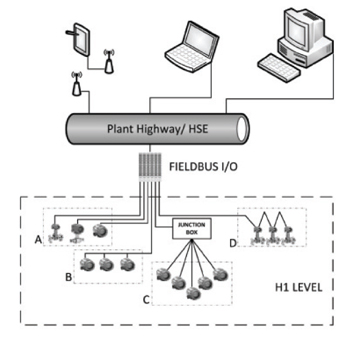
AutoQuiz: What is Tree Topology in Fieldbus?
Tree Topology concentrates the connection of several field devices to couplers/junction boxes. Tree topology is also known as "Chickenfoot" or "Star" configuration. -
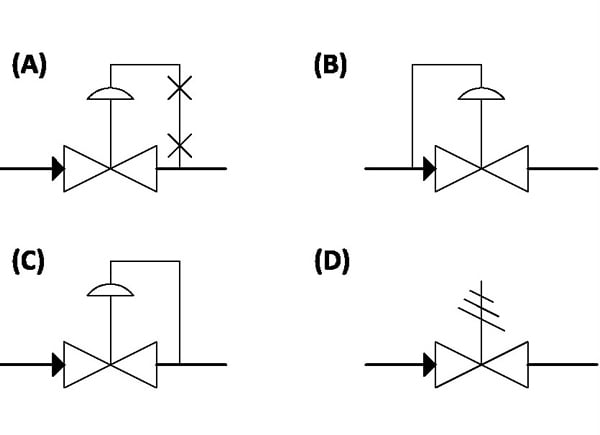 Feature
AutoQuiz: What P&ID Symbol Is Used to Indicate a Temperature Regulator?
The symbol reflects a temperature regulator, filled thermal system. -
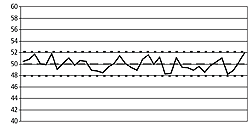 Feature
AutoQuiz: How to Assess the Optimal Alarm Deadband Setting
Learn to assess the alarm deadband setting on a high alarm. -
 Feature
AutoQuiz: What Is the Purpose of an Intrinsic Safety Barrier?
An intrinsic safety barrier prevents excess voltage and current from reaching the hazardous area. -
Feature
AutoQuiz: How to Assess the Hazard/Risk Category for an Industrial Electrical Panel
Work on energized electrical conductors and circuit parts, including voltage testing on panelboards, or other equipment rated 240V and below would be classified as Hazard/Risk Category 1. -
 Feature
AutoQuiz: How is the Reynolds Number Used in Flow Measurement?
For the Reynold's number, the inertial forces in the numerator are given by the product of mass (density), fluid velocity, and pipe diameter. -
 Feature
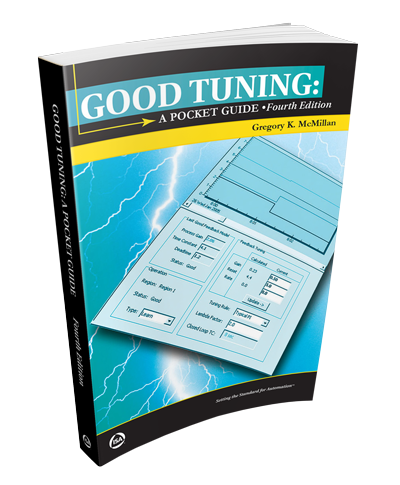
AutoQuiz: What Is the Best Tuning Method for a Catalyst Feed Flow Controller?
Only a closed-loop tuning method can be used with an exothermic reaction where the reactor can "run away" (increasing speed of reaction as the reaction progresses, catalyzed by its own heat of reactio -
 Feature
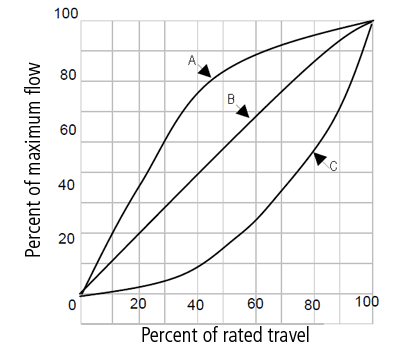
AutoQuiz: Plotting Control Valve Characteristics
For an equal percentage valve characteristic, each increment of valve movement provides the same percentage increase in flow. -
 Feature
AutoQuiz: What is the Lifecycle Economic Model?
All lifecycle costs should be considered over the entire expected life of a project, with all costs calculated on a net present value basis. -
 Feature
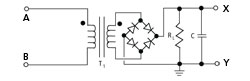
AutoQuiz: Characteristics of a Full-Wave Bridge Rectifier Circuit
A bridge rectifier consists of diodes in a bridge circuit configuration. It features the same output polarity for either input polarity, and is used for converting an alternating current (AC) input in -
 Feature
AutoQuiz: What Is the Cause of Cavitation in a Liquid Flow Stream?
When fluid drops below a liquid's vapor pressure, a gas is formed. As fluid moves downstream to where the fluid pressure is greater than the vapor pressure, it "collapses" back into a liquid. -
 Feature
AutoQuiz: How to Read a Gauge Pressure Transmitter
At zero gauge pressure in the steam line, you are essentially suppressing (pushing) the transmitter output back down to zero after the system reaches equilibrium. The transmitter will read that impuls -
 Feature
AutoQuiz: Failures of Complex Systems in SIS Design and SIL Selection
A fault tree analysis begins with the "top event," which is the result of a number of basic events that contribute to, or initiate, the system failure. -
 Feature
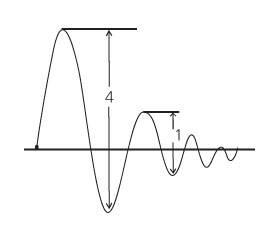
AutoQuiz: Loop Tuning Terminology for Change in Amplitude
The common method of judging tuning is known as the "quarter wave decay" method. It has been shown if a loop is tuned so the oscillation decays with each wave being one quarter of the previous wave, i -
Feature
AutoQuiz: Industrial Applications for Nonincendive-Rated Field Wiring
Nonincendive is allowed in Class 1, Division 2; Class 1, Zone 2, and Non-hazardous rated areas. Use in higher hazard areas, such as Division 1, Zone 1, or Zone 0 areas, is not allowed. -
 Feature
AutoQuiz: Standard Wiring Color for Type K Thermocouple
Type K (chromel–alumel) is the most common general purpose thermocouple with a sensitivity of approximately 41 µV/°C. -
 Feature
AutoQuiz: What Is the Liquid Flow Condition Where Falling Static Pressure Causes Formation of Vapor Bubbles?
The first stage of cavitation is the formation of vapor bubbles within the liquid system because of the fluid's static pressure falling below the fluid vapor pressure -
 Feature
AutoQuiz: What are the Advantages and Disadvantages of RTDs?
Resistance temperature detectors require a temperature transmitter to function. This is not a disadvantage of an RTD, since its function does not require a temperature transmitter to be installed. -
 Feature
AutoQuiz: How to Interpret Relay Logic for a Pump Control Switch
When a pump control switch is in auto, the storage tank low level switch or the pressure tank high level switch can stop the pump. -
 Feature
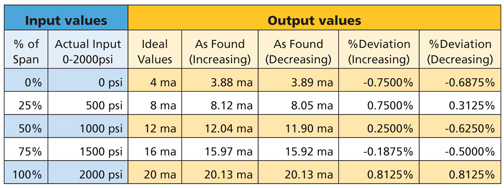
AutoQuiz: How to Diagnose Industrial Pressure Sensor Errors
If a pressure sensor/transmitter is giving a non-linear response, replacement of the sensor and/or the transmitter will be required. -
 Feature
AutoQuiz: Motor Shaft Speed Relationship to Frequency and Number of Poles
The shaft speed of a motor is directly proportional to the frequency and is inversely proportional to the number of poles. -
 Feature
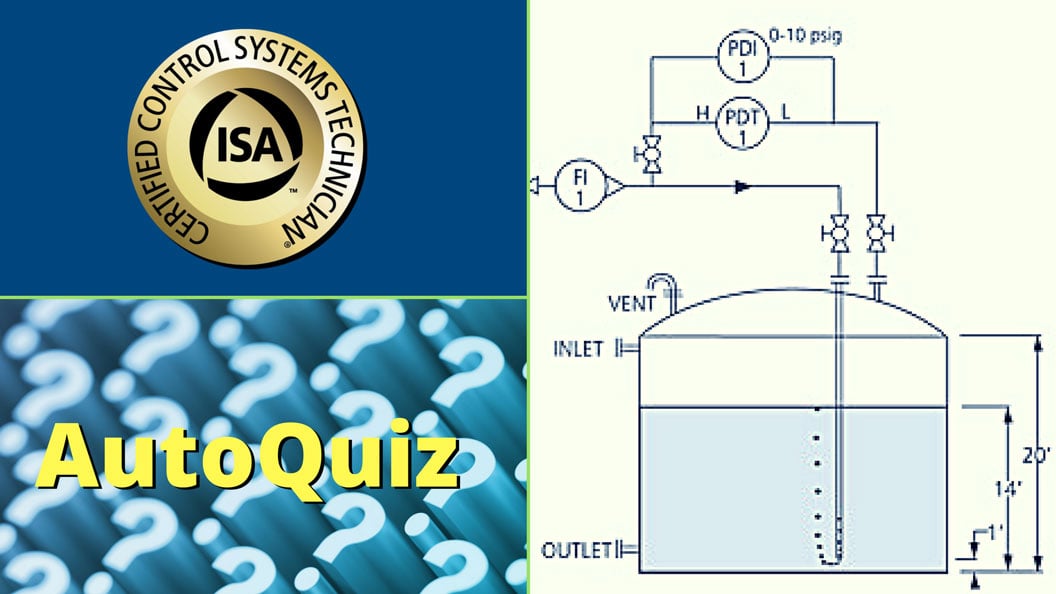
AutoQuiz: How to Measure Tank Differential Pressure
A tank level is measured using a differential pressure transmitter (DPT-1) and a bubbler tube. The tank is vented to atmosphere. -
 Feature
AutoQuiz: Nonhazardous Pressurization Systems
A Type X pressurization system reduces the classification within the enclosure from Division 1 to nonhazardous and, therefore, permits the use of ignition-capable equipment inside the enclosure. -
 Feature
AutoQuiz: Identify the Function of a P&ID Symbol
In a P7ID diagram, a "circle" enclosed in a "square" indicates it is an instrument that has a shared display or a shared control. -
 Feature
AutoQuiz: What Is the Best Location in an HMI for the Graphic Display of a Distillation Column?
A distillation column refers to one piece of equipment in the distillation process, which will contain several loops. -
 Feature
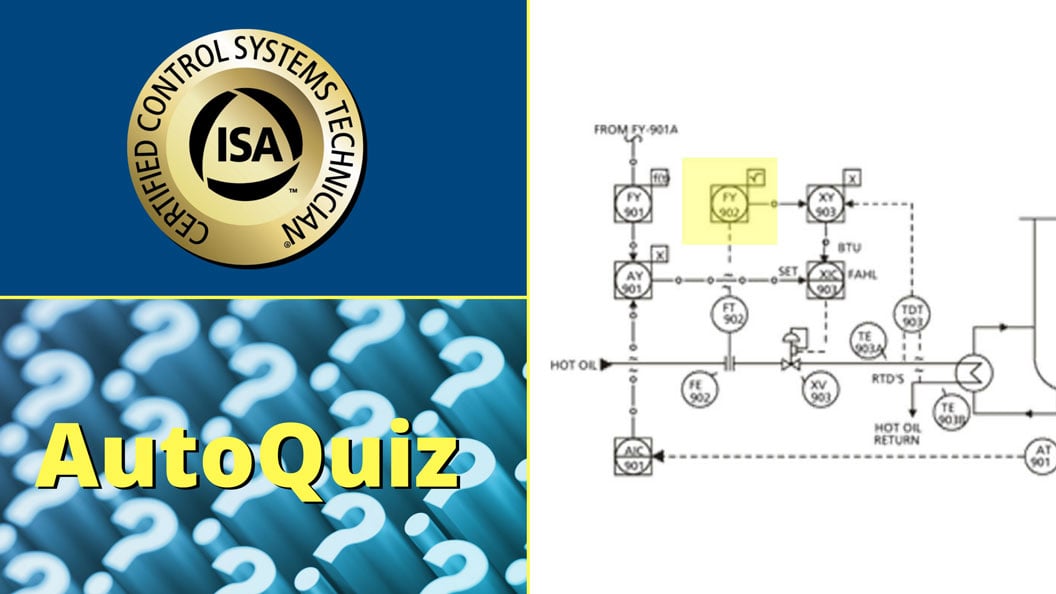
AutoQuiz: Can You Identify the P&ID Symbol?
A "circle" enclosed in a "square," which indicates it is an instrument with a shared display or a shared control. -
 Feature
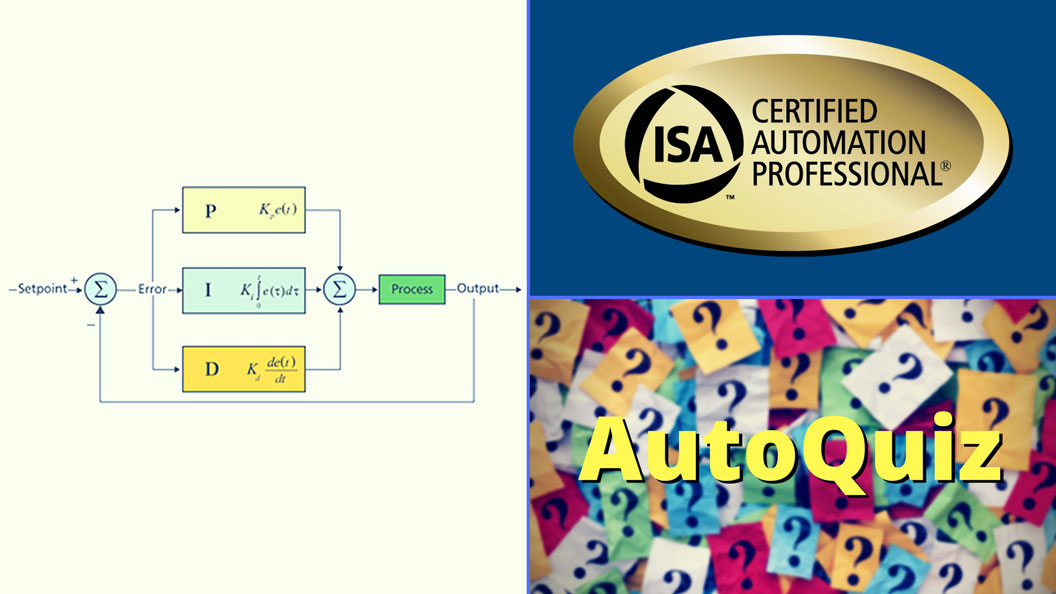
AutoQuiz: What Is PID in a Control Loop?
The PID term as described refers to the loop control technique used in controllers. A PID control loop includes proportional, integral, and derivative functions to control the process. -
-
 Feature
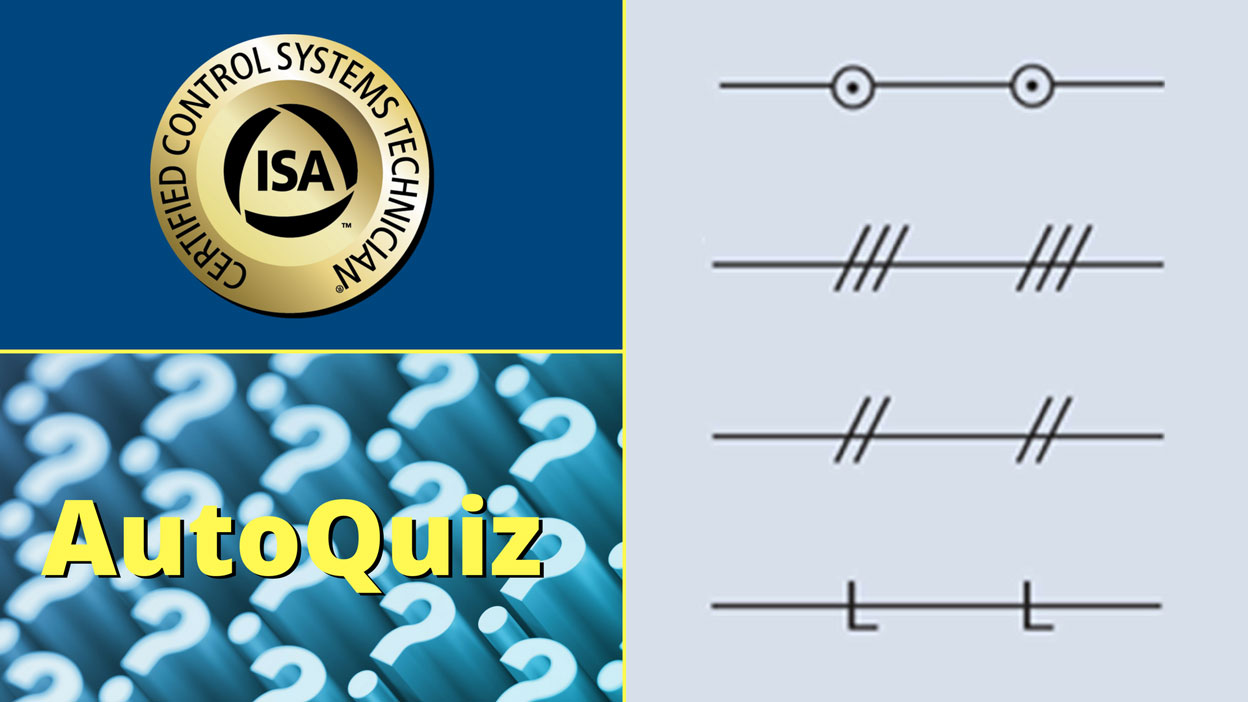
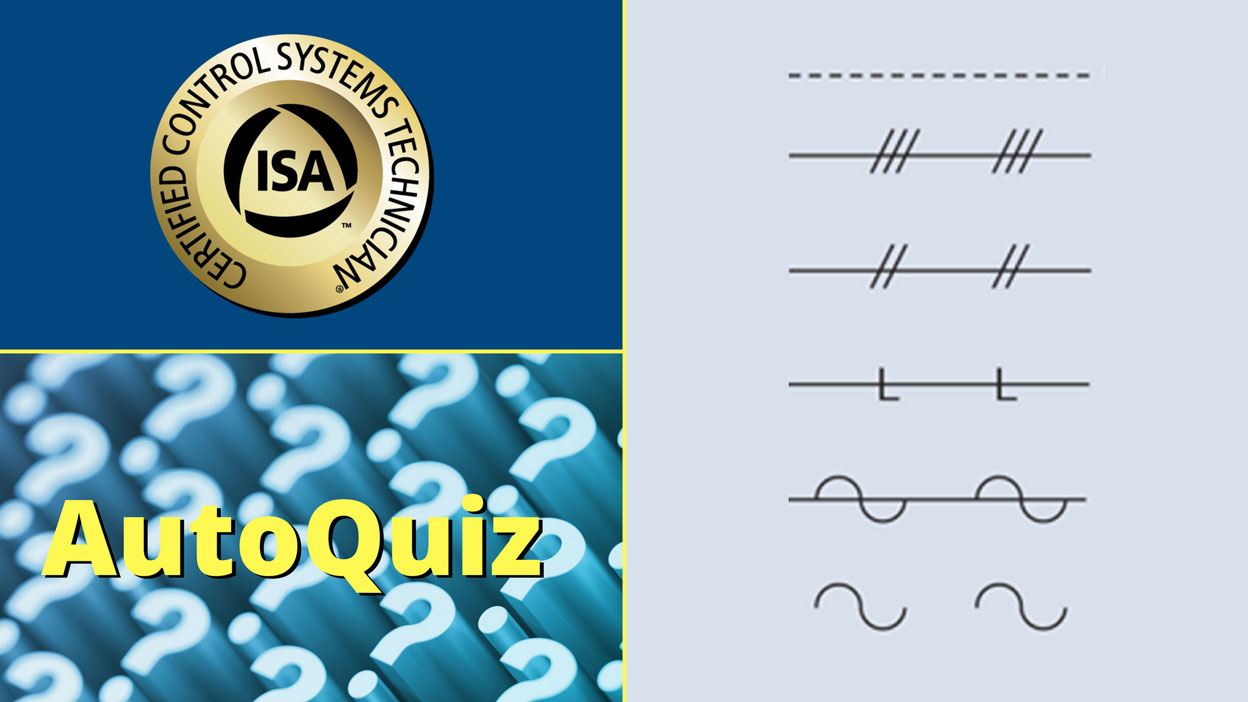
AutoQuiz: Can You Identify Instrument Line Symbols?
ISA-5.1-1984 (Revised 1992) - Instrument Symbols and Identification. -
 Feature
AutoQuiz: How to Minimize Electrical Interference with AC Power and DC Signal Wiring in a Control Panel
Crossing the wires at 90 degrees will minimize the exposure of the wires to each other and therefore minimize the effects of interference. -
 Feature
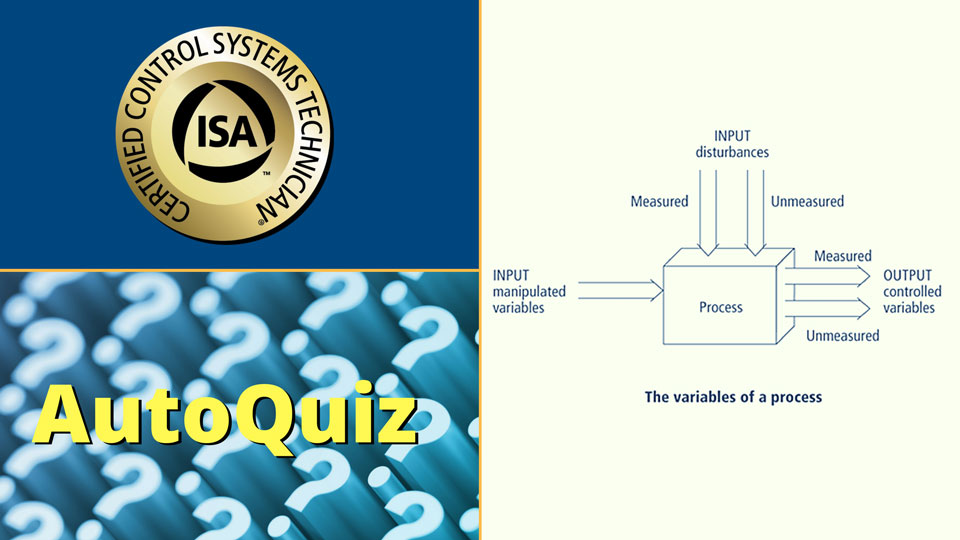
AutoQuiz: What Is an Industrial Process Variable?
The controlled variable by definition is the variable that the control system attempts to keep at a "set point" value. -
 Feature
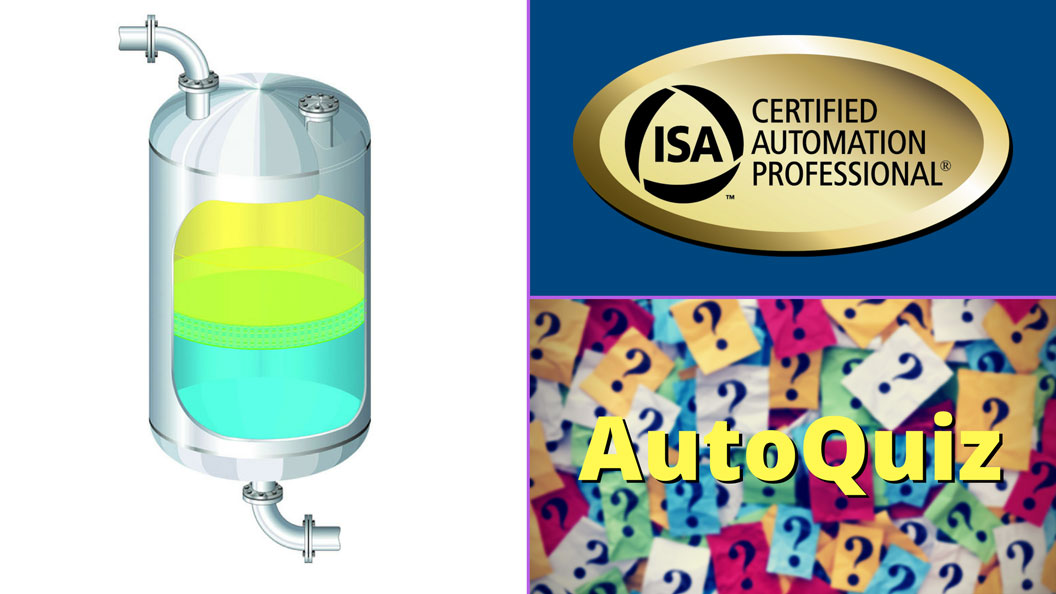
AutoQuiz: How to Choose Best Method for Level Measurement
Radar does not depend on temperature or composition of a fluid as long as the beam is narrow and the dielectric constant of the fluid is greater than two. -
 Feature
AutoQuiz: How to Measure Pressure in a Tank
Perform the calculation using dimensional analysis from conversion tables 33.9 ft water equals one atmosphere equals 14.696 lbf /in2 (psi). -
 Feature
AutoQuiz: How to Calculate the Rated Torque for a Motor
The volts-per-hertz ratio (V/Hz) controls the torque of a motor. -
 Feature
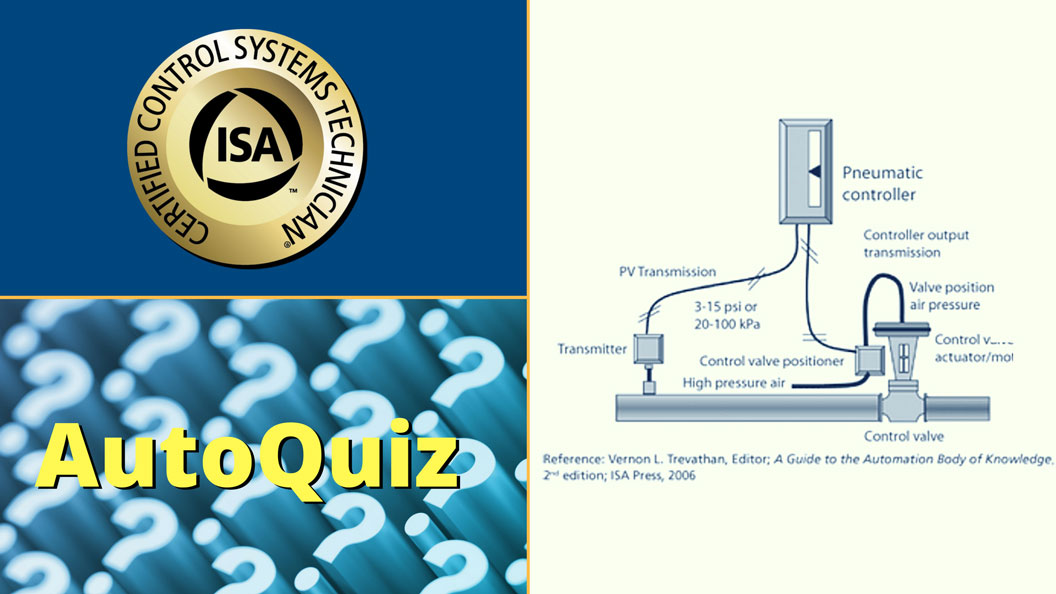
AutoQuiz: Standard Range for Pneumatically Transmitted Signals
For the sake of ease and safety, Industry recognized it is better for an operator to monitor and control processes in a more convenient and protected place -
 Feature
AutoQuiz: How to Measure the Resistance of a Conductor
The resistance of a length of a conductor can be determined using the specific resistance and the cross-sectional area by using the equation R = r L/A -
 Feature
AutoQuiz: Level Reading with a Differential Pressure Cell
If a differential pressure cell is not at an elevation that corresponds to zero percent level in a tank, calibrate to account for difference in elevation. -
 Feature
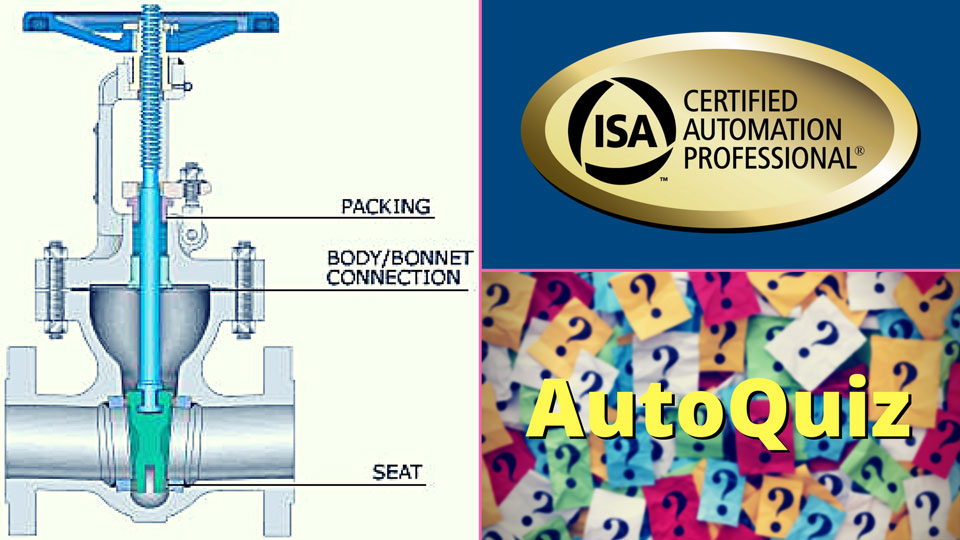
AutoQuiz: Which Control Valve Style Is More Likely to Develop a Blockage?
Ball, butterfly, and pinch valve body style have straight-through flow, and they are less likely to develop blockage. -
 Feature
AutoQuiz: How to Calibrate a Magnetic Flowmeter
Magnetic flowmeters use Faraday's law of magnetic induction as the basis of their operation. -
 Feature
AutoQuiz: What Are Acceptable Hazardous Location Protection Techniques for Industrial Areas?
Hazardous location protection techniques are defined by NEC 500.7 (NEC 2002 Code). -
 Feature
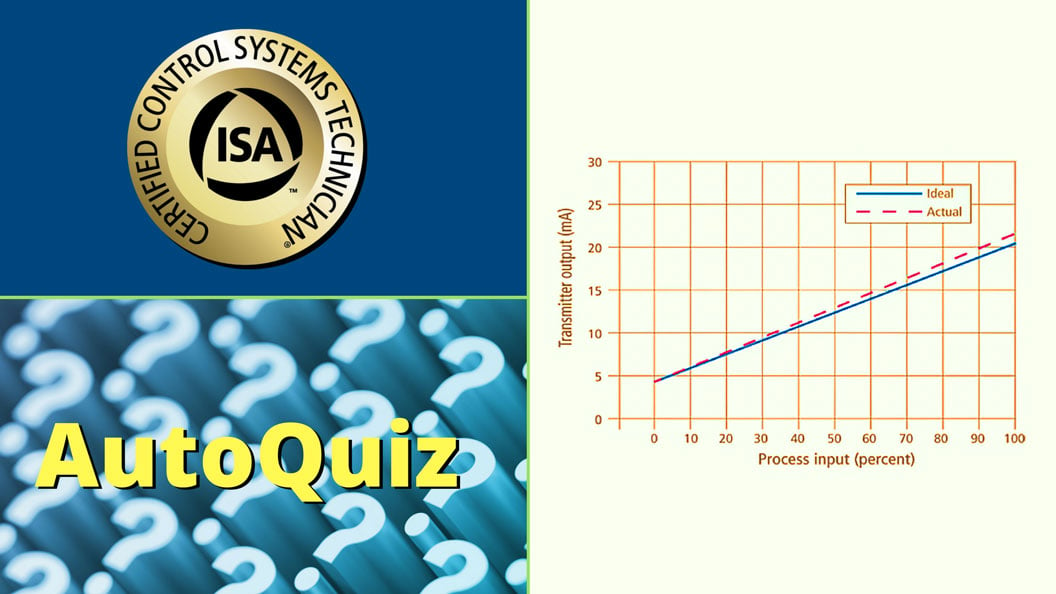
AutoQuiz: When Does an Instrument Need to Be Recalibrated?
Analysis of a calibration plot will help you determine when an industrial instrument needs to be recalibrated. -
 Feature
AutoQuiz: What Is the Standard for Embedded Software for a SIL 3 Certified Safety System?
According to IEC 61511-1, embedded software, which is part of the safety device/ controller, should follow software guidelines in IEC 61508-3. -
 Feature
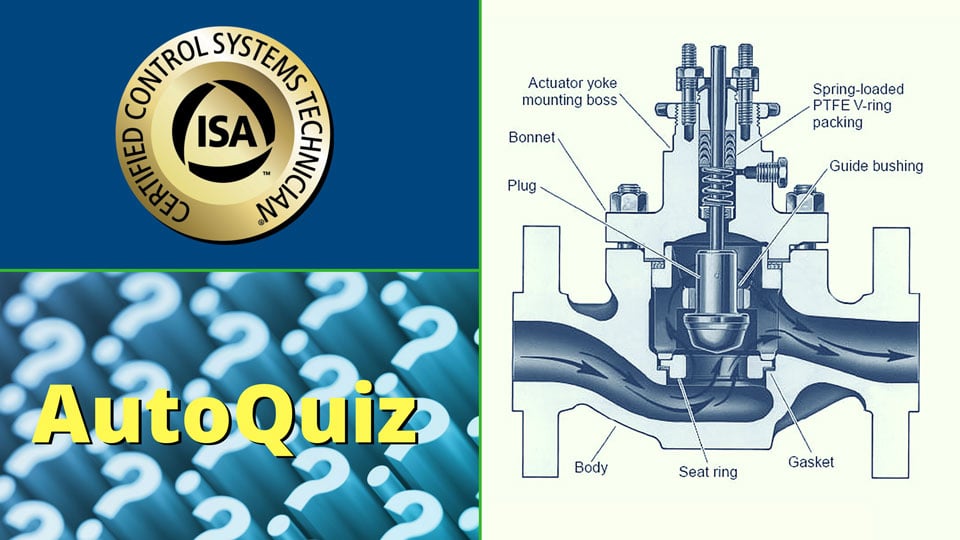
AutoQuiz: How to Calculate the Inherent Flow Characteristic of a Valve
The inherent flow characteristic is the relationship between valve capacity and valve travel, and it is usually expressed graphically. -
 Feature
AutoQuiz: Industrial Electrical Standards for Emergency Operations
The reset of an emergency stop circuit will not initiate a restart. -
 Feature
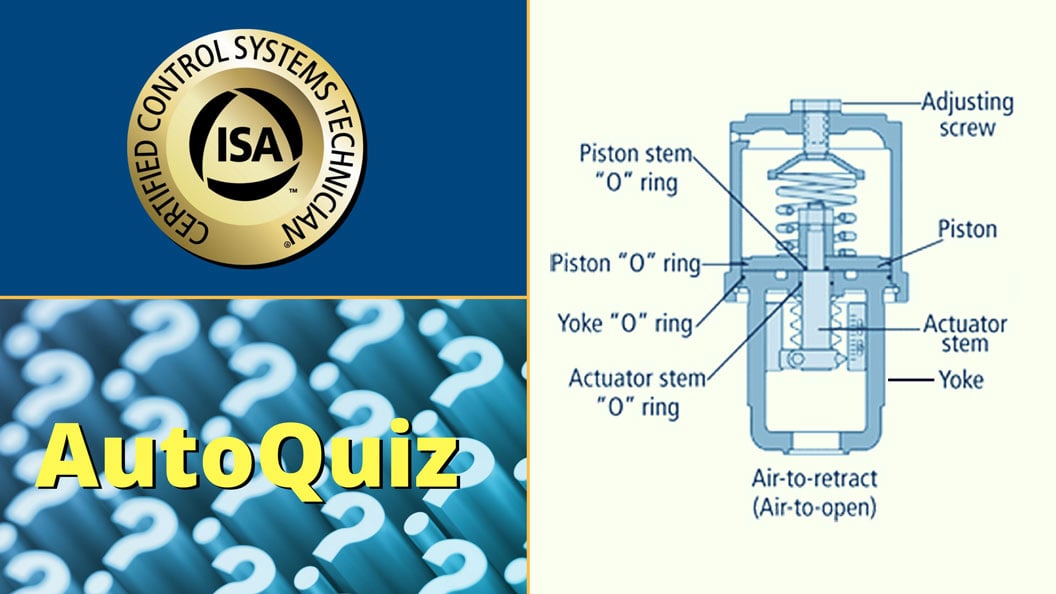
AutoQuiz: What Are the Characteristics of a Piston Actuator?
An actuator is a device that applies the force necessary to cause a valve's closure member to move. -
 Feature
AutoQuiz: What Is the Length Limitation for Fast Ethernet Cable?
Because of the high speed of fast Ethernet, the use of twisted pair cable is limited to 100 meters (330 feet). -
 Feature
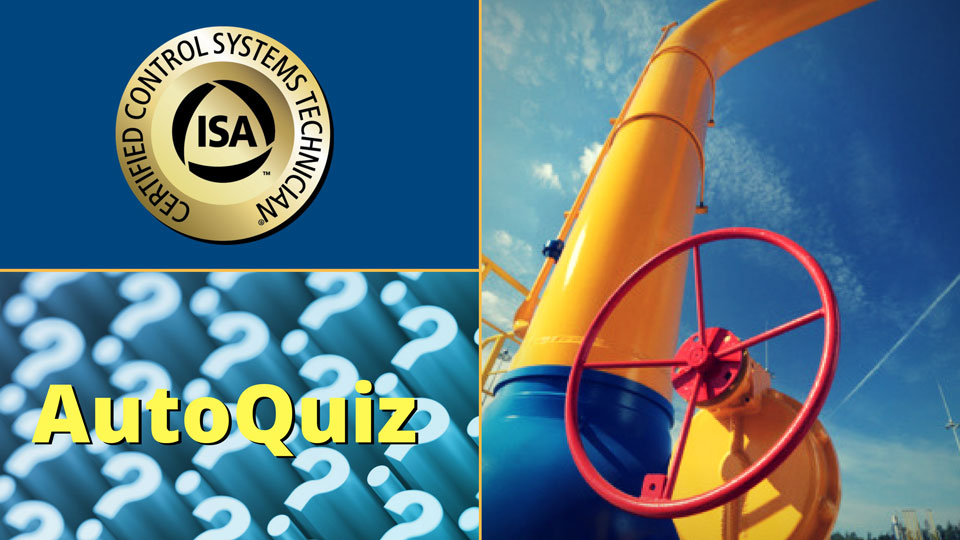
AutoQuiz: How Is Fluid Velocity Affected When the Pressure Drop Across a Valve Increases?
The pressure drop refers to the change or drop in pressure from the upstream side of the valve to the downstream side. -
 Feature
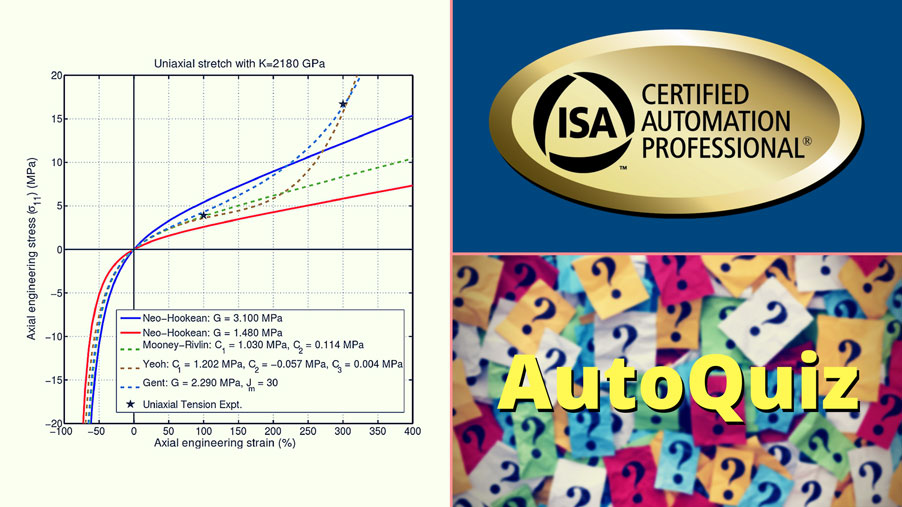
AutoQuiz: What Is the Most Appropriate Technique for Modeling Linear Relationships?
The multivariate statistical-process control excels at modeling unknown linear relationships for a large number of inputs that could be correlated. -
 Feature
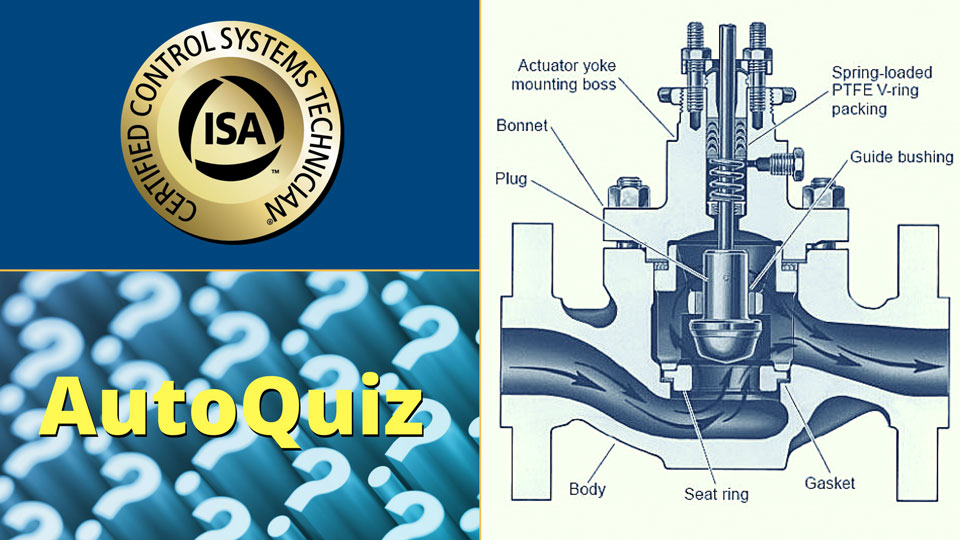
AutoQuiz: What is the Inherent Flow Characteristic of a Valve?
The "inherent flow characteristic" is the relationship between valve capacity and valve travel, and it is usually expressed graphically. -
 Feature
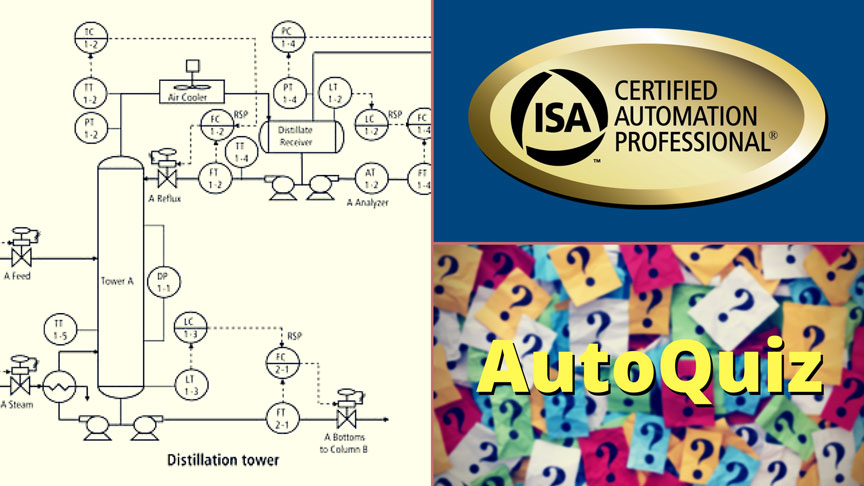
AutoQuiz: How to Minimize the Effect of Feed Upsets to the Top of a Distillation Column
A distillation tower has feed upsets that are measured and used to create a feed forward signal. -
 Feature
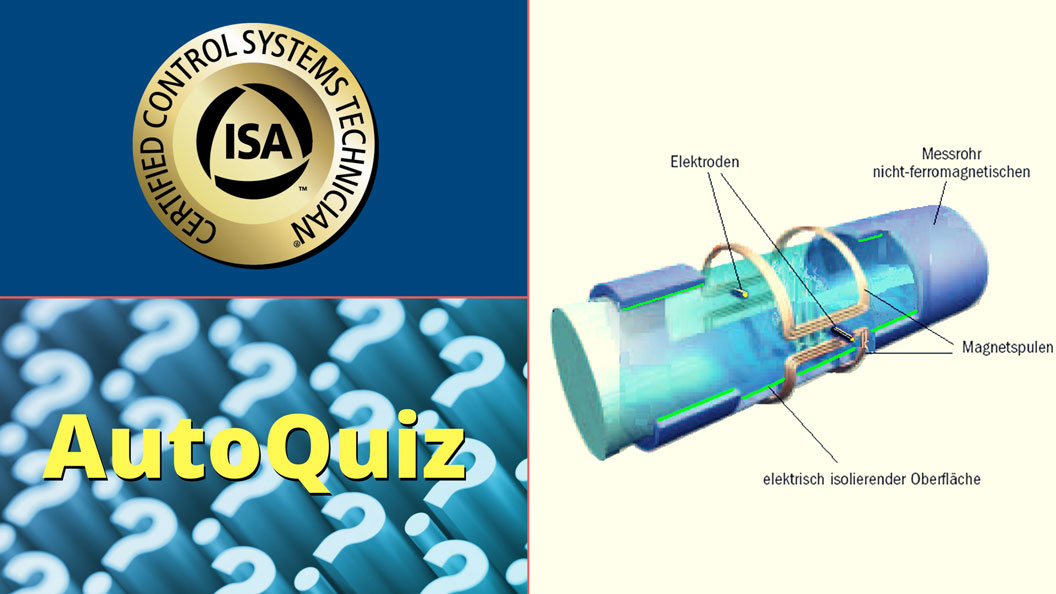
AutoQuiz: How to Install an Electromagnetic Flowmeter
The magnetic flowmeter conductor (fluid in pipe) moves through a magnetic field; a voltage is produced relative to speed of the conductor & magnetic field. -
 Feature
AutoQuiz: How to Calculate the Transfer Function
A transfer function is a mathematical representation of the relationship between the input and output of a system. -
 Feature
AutoQuiz: Which Orifice Plate Is Used to Eliminate Damming of Material at the Top or Bottom of a Pipe?
Orifice plates are in a straight run of smooth pipe away from valves and fittings so they do not interfere with the restrictor and readings. -
 Feature
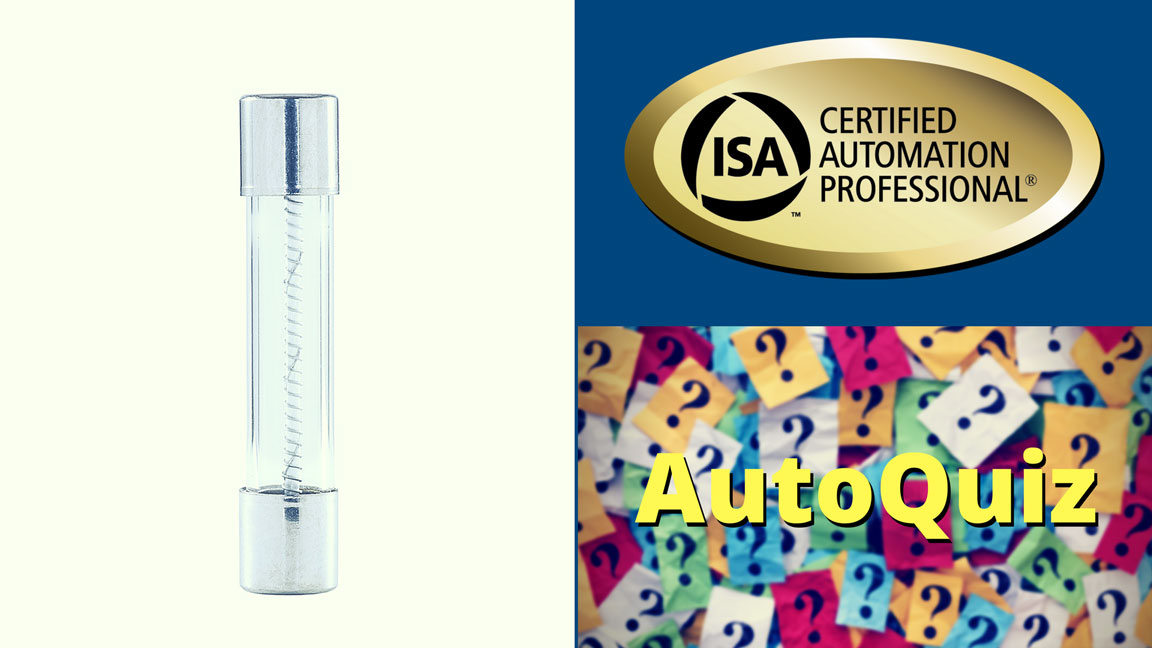
AutoQuiz: Which Fuse Has the Quickest Response to Over Currents?
Certain types of fuses have a very high speed of response to over currents. They provide excellent short-circuit component protection. -
 Feature
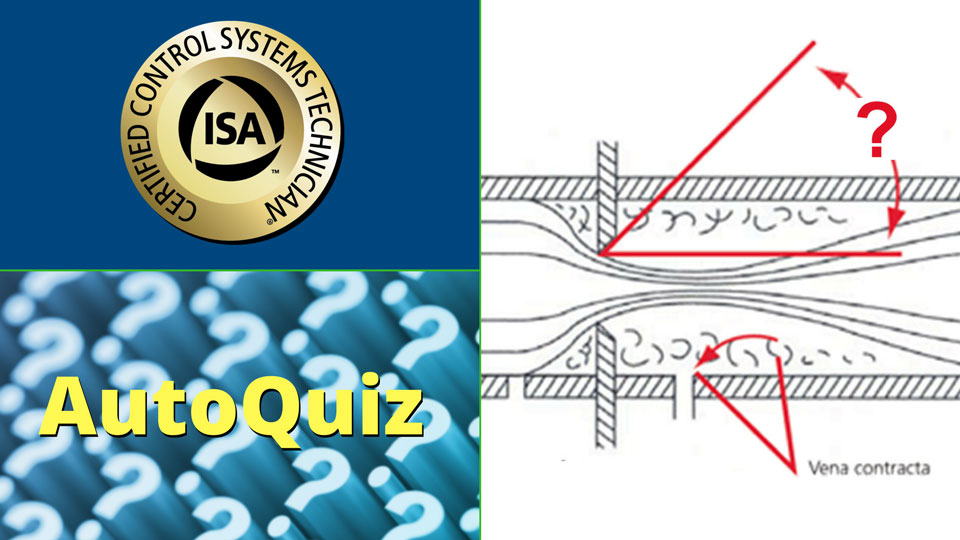
AutoQuiz: Optimal Beveled Orifice Angle for Flow
An orifice plate inserted in the line causes an increase in flow velocity and a corresponding decrease in pressure. -
 Feature
AutoQuiz: What Is the Maximum Level of Precision Available Using Modbus?
To achieve more precision special programming or a specialized version of Modus is necessary. -
 Feature
AutoQuiz: What is the Most Common Pressure Tap?
The purpose of pressure taps is prevent gas or vapor accumulations in the connections between the pipe and differential-pressure (dP) measuring device. -
 Feature
AutoQuiz: Standard NFPA Wire Colors
NFPA's mission is to reduce fire and other hazards via scientifically based consensus codes and standards, research, training, and education. -
 Feature
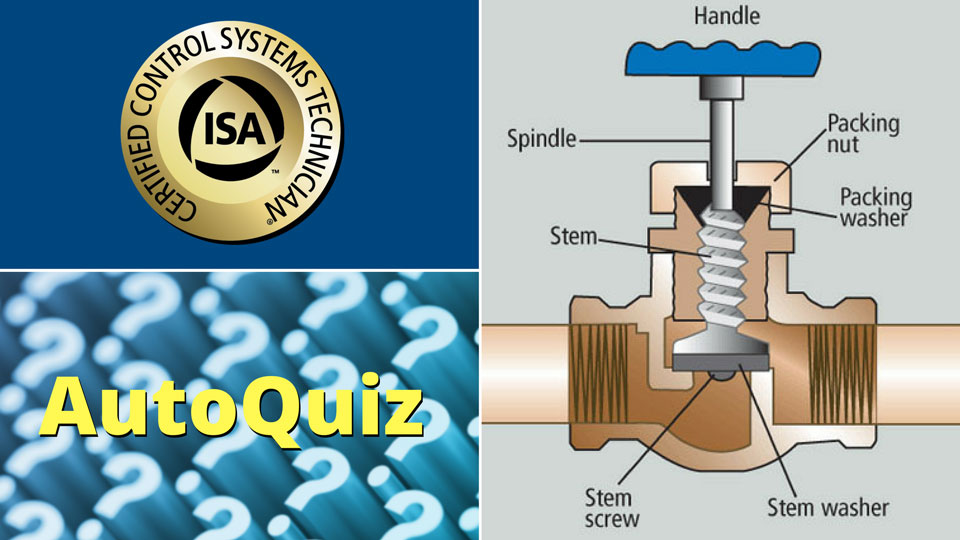
AutoQuiz: Characteristics of a Control Valve
A rotary valve has a flow closure member that rotates in the flow stream to modify the amount of fluid passing through the valve. -
 Feature
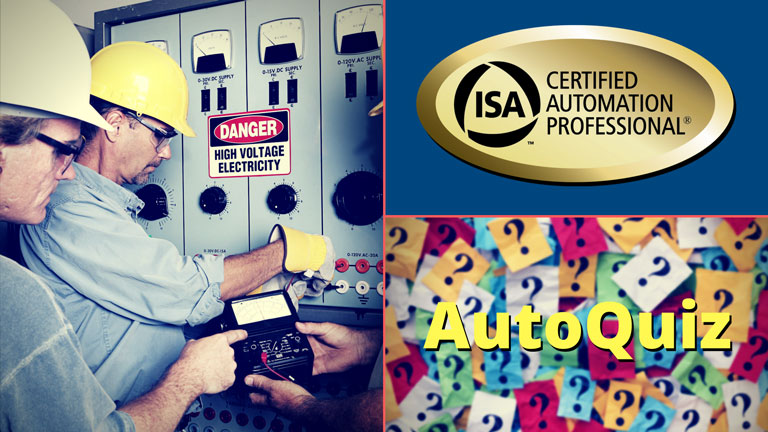
AutoQuiz: What Type of Electrical Enclosure Resists Corrosion and Provides Protection?
NEC 2002 defines an enclosure Type 4x as ideal for outdoor use and resistant to splashing water, windblown dust, hose directed water, and corrosion. -
 Feature
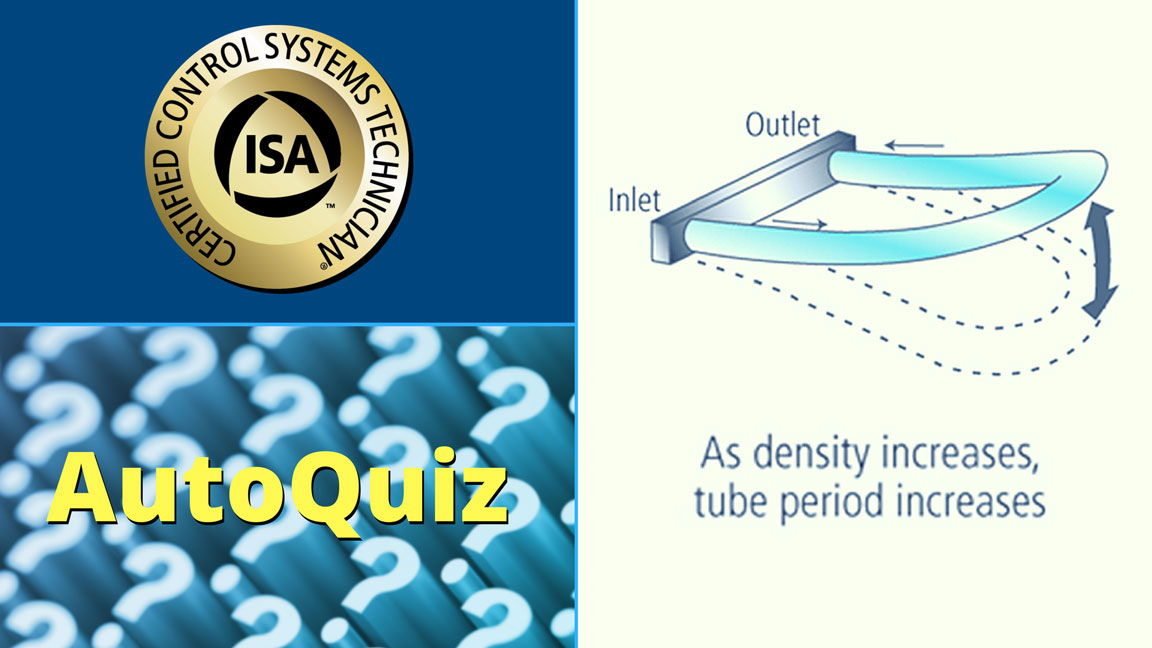
AutoQuiz: What is the Coriolis Effect?
Using the Coriolis effect that causes a laterally vibrating tube to distort, a direct measurement of mass flow is obtainable using a Coriolis flowmeter. -
 Feature
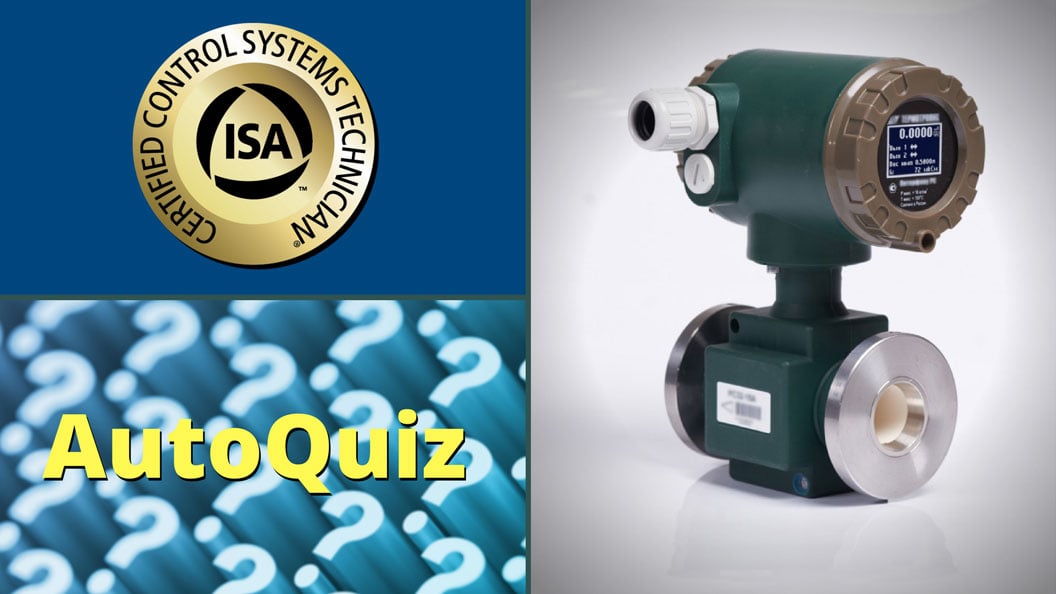
AutoQuiz: What Flowmeter Does Not Use an Obstruction?
A magnetic flowmeter is a volumetric flowmeter, which does not have any moving parts and is ideal for wastewater applications or any dirty liquid. -
 Feature
AutoQuiz: Best Strategy for Finding Efficient Operating Points with Complex Shifting Process Conditions
Real-time optimization with a detailed process model is the best approach to fining the most efficient operating points. -
 Feature
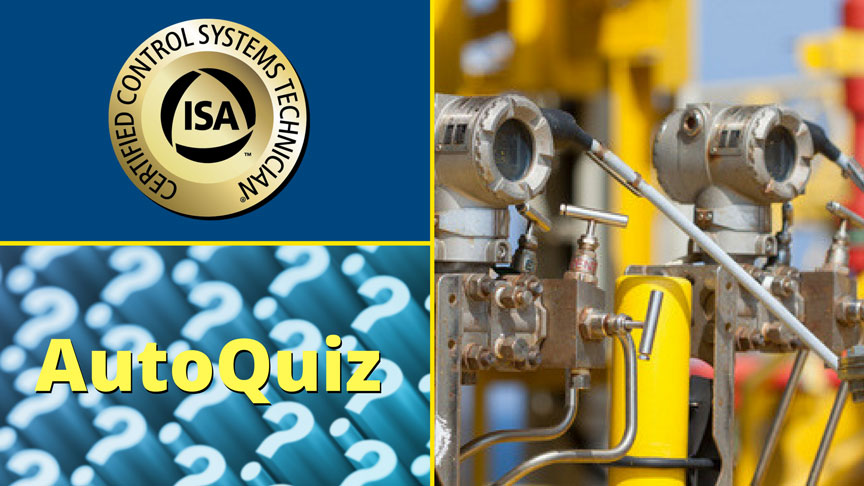
AutoQuiz: What Is the Application for an Impulse Line in Fluid Flow?
Impulse lines connect the process to the pressure transmitter, to reduce the effect of ambient temperature on the transmitter's operability and life span. -
 Feature
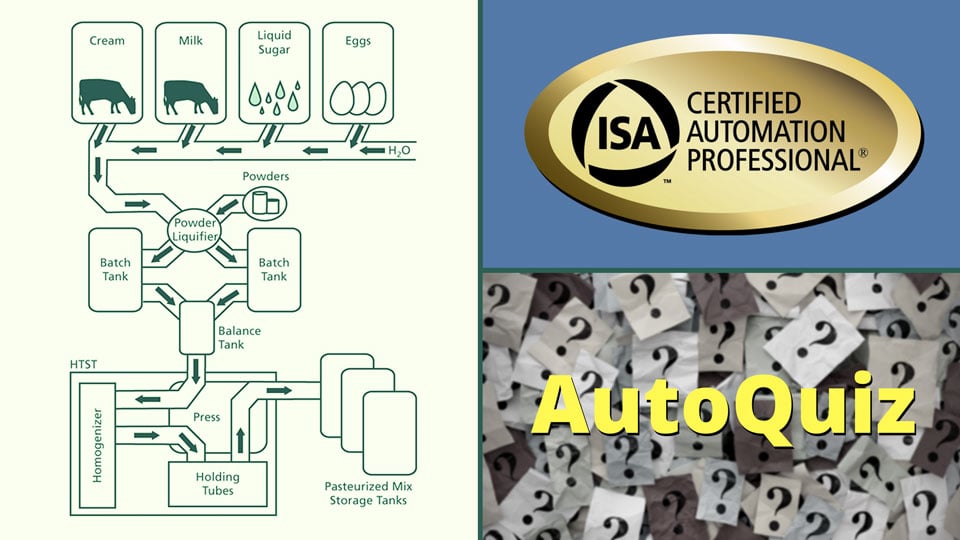
AutoQuiz: Why Are Gathering Requirements Critical to the Success of an Automation Project?
Gathering requirements are important because they define the objectives, purpose, scope, needs, and other key meters. -
 Feature
AutoQuiz: What Is the Process for a Continuity Check of a Field Transmitter?
A continuity check is performed on a length of finished wire or cable to determine if the electrical current flows continuously throughout the length. -
 Feature
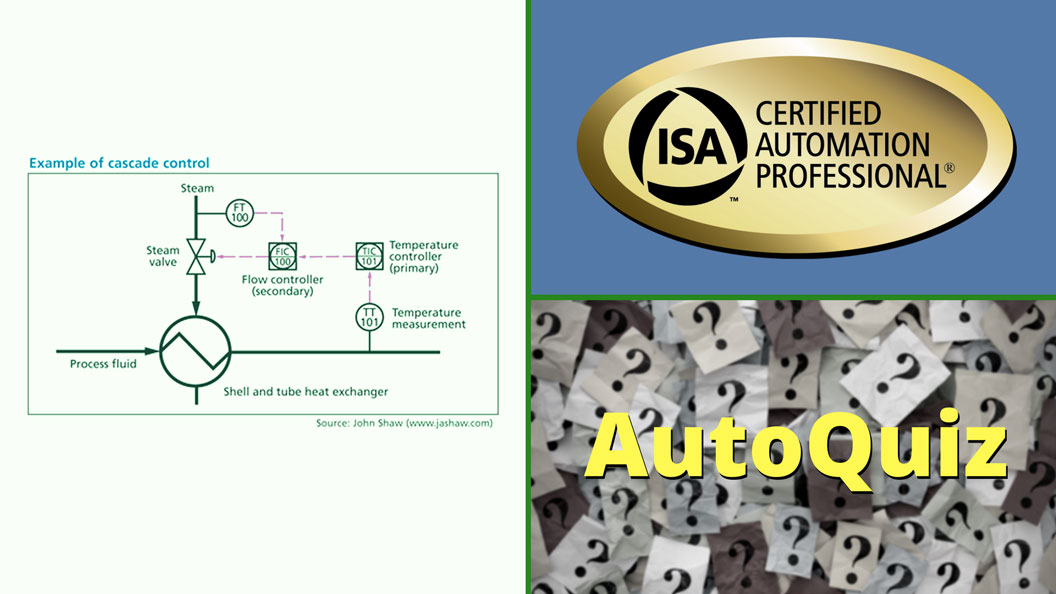
AutoQuiz: How to Measure and Compensate for Disturbances to Prevent Set Point Deviance
The objective of feedforward control is to measure disturbances and compensate for them before the controlled variable deviates from set point. -
 Feature
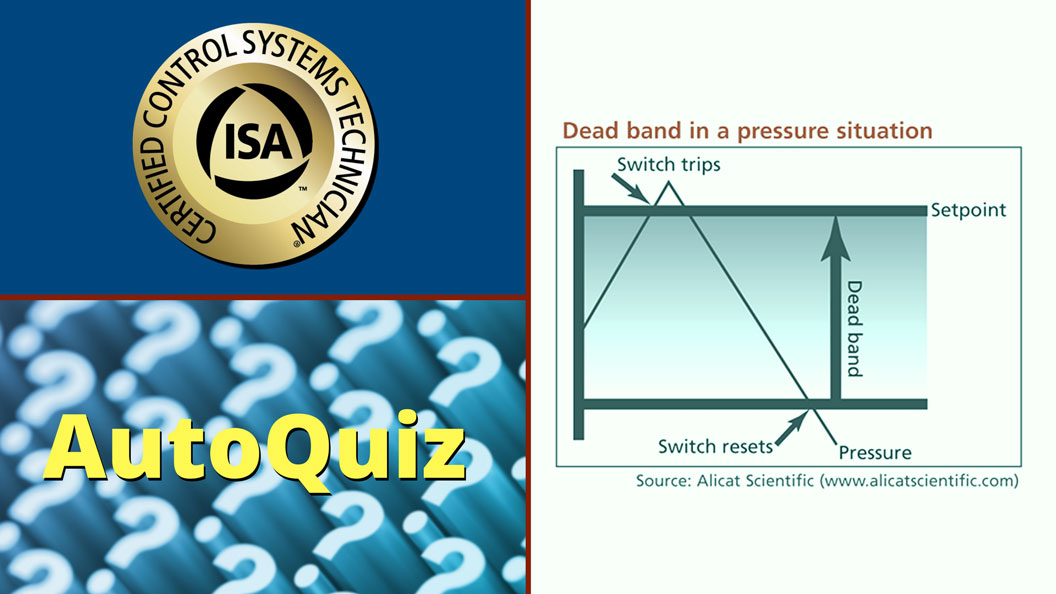
AutoQuiz: What Is the Dead Band of an Instrument?
The dead band is the range through which an input signal may vary, upon reversal of direction, without initiating an observable change in output signal. -
 Feature
AutoQuiz: How to Simultaneously Optimize an Interacting Dead-Time Dominant Process with Multiple Constraints
Model predictive control excels at dead-time dominance and simultaneous optimization while accounting for future prediction of proximity to constraints. -
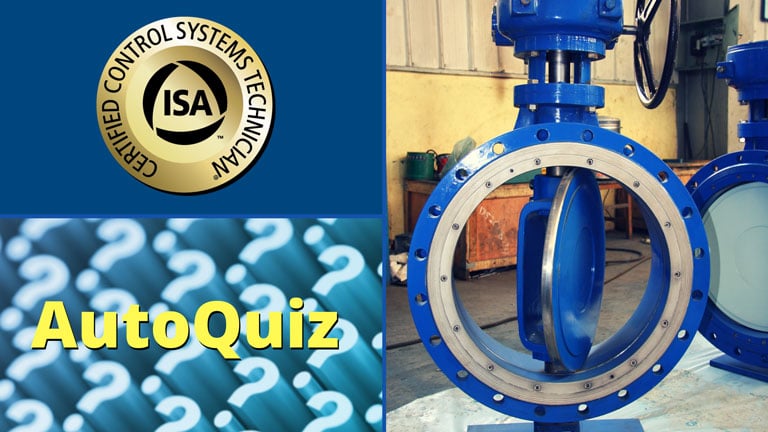 Feature
AutoQuiz: What are the Closure Members in Globe and Butterfly Valves?
A butterfly valve has a circular body and a rotary-motion disk-closure member. The physical blocking mechanism in a globe valve is a plug.